
Assembly-line maintenance
Overhead conveyors, gantries and press equipment need reach, while the deck must still squeeze between live lines.
Lever: lift height + platform footprintChoosing a build comes down to four questions: how high you need to reach, how much the deck must carry, how large a platform the work needs, and where the power comes from. This guide sets out the verified values for the electric tricycle scissor lift and shows how those choices combine on an electric tricycle mounted scissor lift platform before you send a quote request.
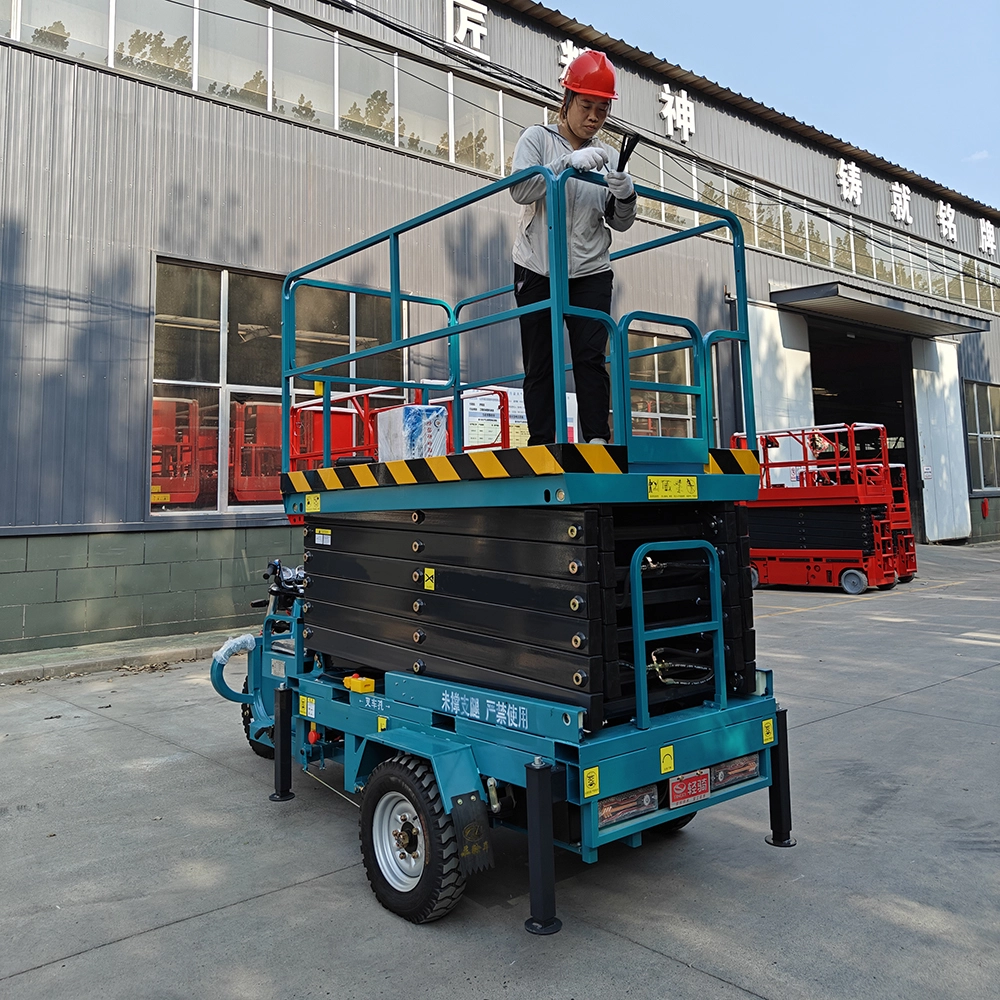
Every figure below is taken from the product listing. Where the listing gives a range instead of a fixed number, treat it as a bracket to confirm at quote stage — the platform is built to the job, so the numbers you send back set the unit you receive.
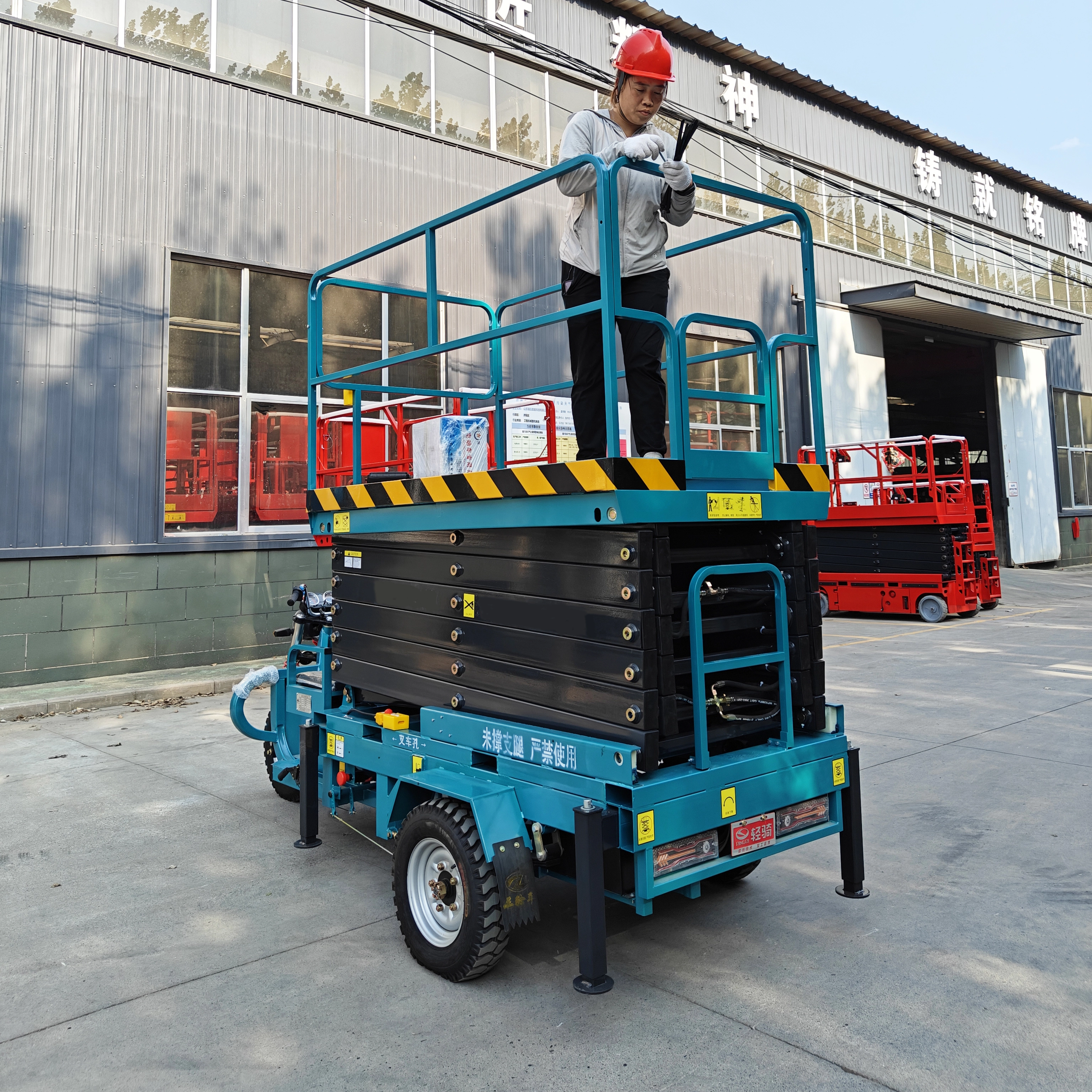
| Specification | Stated value | What it decides for you |
|---|---|---|
| Lifting height | 4–12 m in the product summary; the description references up to 14 m | Your reach at full extension — pick the band that clears the highest work point on site |
| Load capacity | Up to 500 kg | Operator, tools and materials combined; state your working load in the request |
| Platform size | Customizable | Deck footprint versus the materials you handle and the gap you must pass through |
| Power supply | Battery or mains connection | Independence on remote sites versus continuous supply at a fixed work position |
| Chassis / base | Three-wheeled electric tricycle | Turning circle and positioning in confined spaces and narrow service lanes |
| Lift mechanism | Hydraulic scissor | Stable vertical elevation with controlled load handling at height |
No battery capacity, voltage or fixed platform dimensions appear on the listing. Those items are agreed against your job during the quote stage rather than picked from a catalogue.
Five sub-assemblies carry the whole working concept. Read them in order and you can see why the platform size is the one value that changes most from order to order.
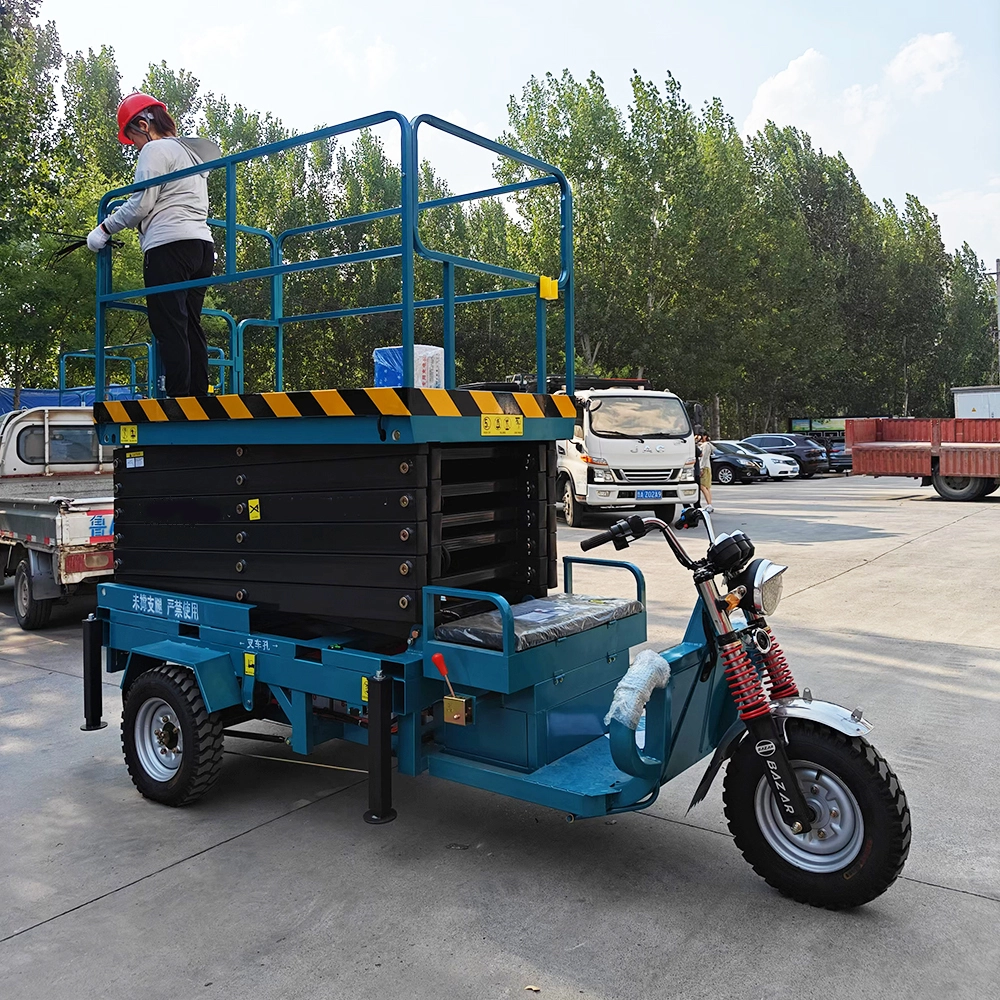
Steers and positions the entire unit. The three-wheel layout is what allows tight-turn navigation and accurate positioning inside a working aisle.
The lifting element between chassis and deck. Stacked scissor arms raise the platform vertically, driven by the electric hydraulic power system.
The working surface itself. Size is customizable, so the deck is built around your footprint rather than trimmed to a stock dimension.
Ergonomic controls handle lift height and directional movement, so raising the deck and repositioning the unit are part of one operating routine.
Integrated safety guards, emergency stop and overload protection, all carried on a welded high-grade steel frame.
The listing states 4–12 m in the product summary and 4 m to 14 m in the description. The grid below shows where a target height sits before you commit to a request, so you know which answers to expect.
| Lift height band | Load | Platform | Power | Chassis | Build status |
|---|---|---|---|---|---|
| 4–6 m | Up to 500 kg | Customizable | Battery or mains | Three-wheel electric | Within stated range |
| 6–9 m | Up to 500 kg | Customizable | Battery or mains | Three-wheel electric | Within stated range |
| 9–12 m | Up to 500 kg | Customizable | Battery or mains | Three-wheel electric | Within stated range |
| 12–14 m | Up to 500 kg | Customizable | Battery or mains | Three-wheel electric | Confirm — description only |
| Above 14 m | — | — | — | — | Outside published range |
Each working environment pulls on one or two specification levers more than the rest. Identify your lever first, then write the request around it.
Overhead conveyors, gantries and press equipment need reach, while the deck must still squeeze between live lines.
Lever: lift height + platform footprintAisle width decides whether the unit can get to the bay at all; the deck has to clear racking uprights on the way up.
Lever: chassis turning + platform sizeTechnician, tools and components share the same deck, so the load figure and the deck shape both matter.
Lever: load capacity + platform sizeSites without a reliable outlet suit the battery option; a fixed work position with power on hand suits mains.
Lever: power supply + lift heightWork happens around customers, so noise and trailing cables count as much as reach and load.
Lever: power supply + quiet operationThe tallest work points sit at the top of the published range, and tool clearance drives the deck request.
Lever: lift height + custom platformThese are the two decisions that most often get settled late — and both are easy to specify up front.
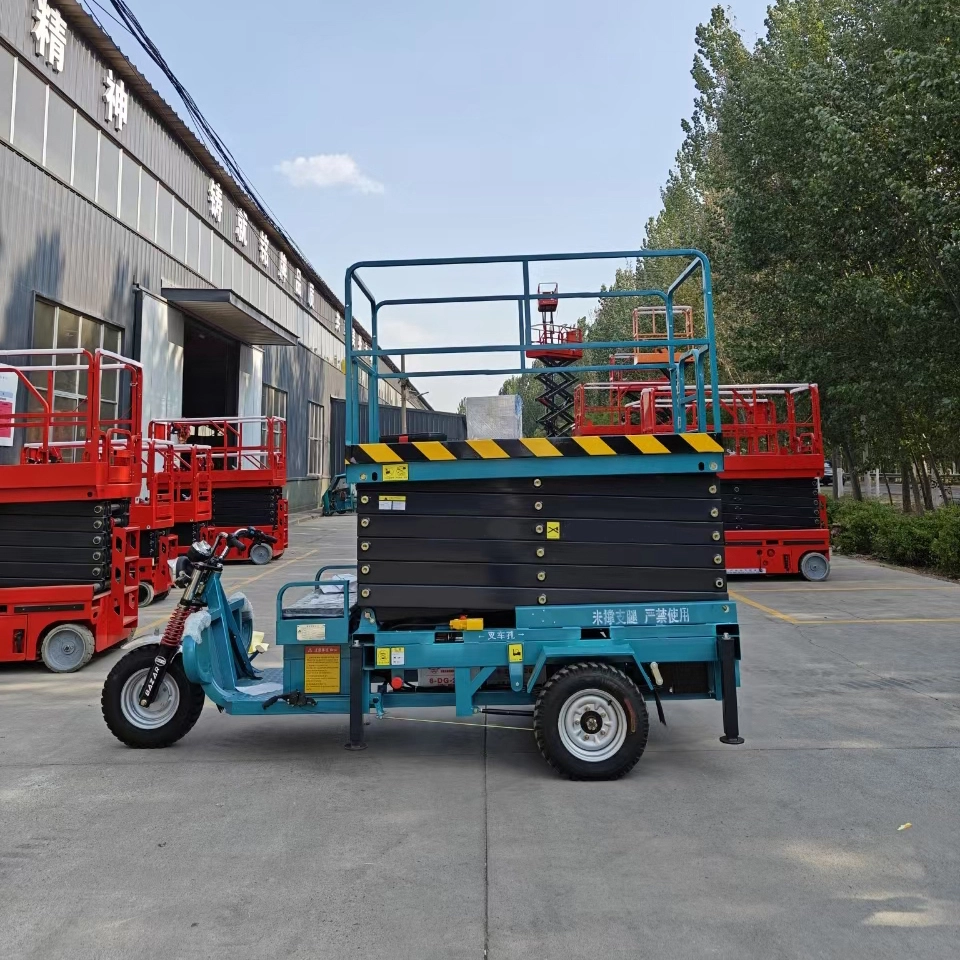
Frees you from a cable run and lets the unit work where there is no outlet. No runtime or battery-capacity figures are published, so confirm charging and shift length when you request the quote.
Suits repetitive cycles at a fixed position where a supply is already available. Confirm voltage and cable routing for your site during the quote stage.
The three-wheeled layout is described for tight-turn navigation and positioning in confined spaces — the reason this unit gets into places a wider base cannot reach.
Ergonomic controls cover lift height and directional movement, backed by integrated guards, emergency stop and overload protection on a welded high-grade steel frame.
The electric hydraulic system is described as quiet and low-maintenance, which matters where the unit works close to people.
The faster your six answers arrive, the faster the build can be confirmed.
Platform size is customizable on this model, so a non-standard deck is a normal part of the build conversation rather than a special exception. Send your footprint with the rest of the specification and it is quoted together with the unit.
Keep adjacent product options together for a faster catalog comparison.

Universal quick-attach skid steer attachments for Bobcat, Caterpillar, JCB and Kubota loaders.
View product
A skid steer forestry mulcher is a specialized attachment designed to mount onto skid steer loaders, converting these versatile machines into highly efficient land-clearing powerhouses.
View product
Manufacturer of skid steer attachments with hydraulic-powered blades. Features fast trimming and offers OEM with factory direct service.
View productReview the product details, images, and specifications presented on the official product page.
Use the application and use-case information published on the official product page.
Confirm the specifications and options listed for the exact product variant before placing an order.
Check the official product page or ask the supplier about options shown for the selected product.
Use the official contact or inquiry path provided on the site.
Include the product page, intended use, required quantity, and any specifications you need the supplier to review.

