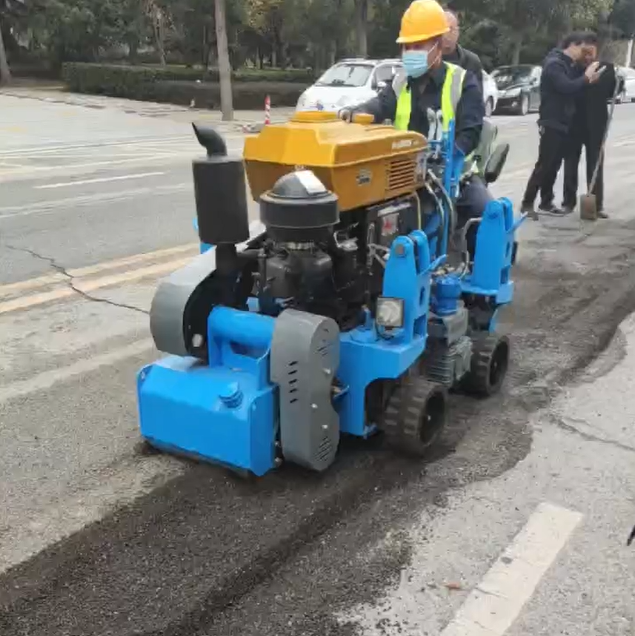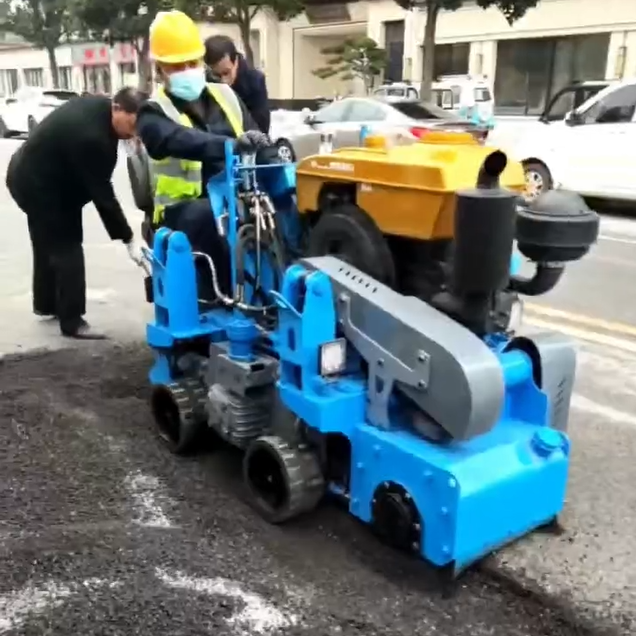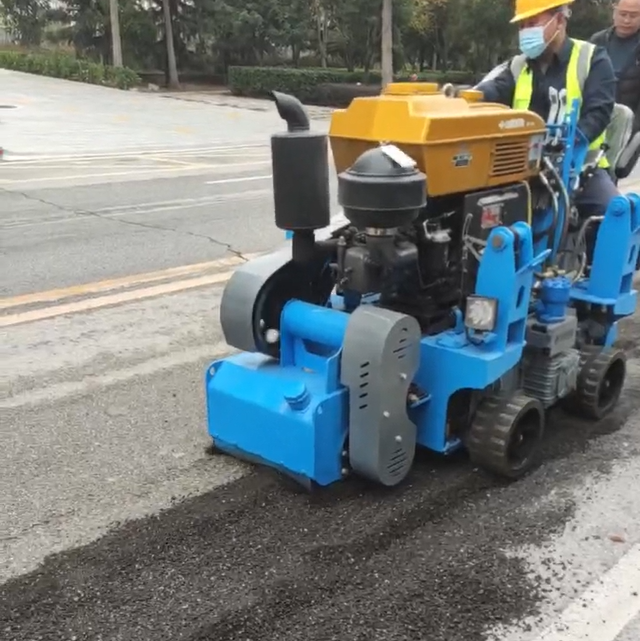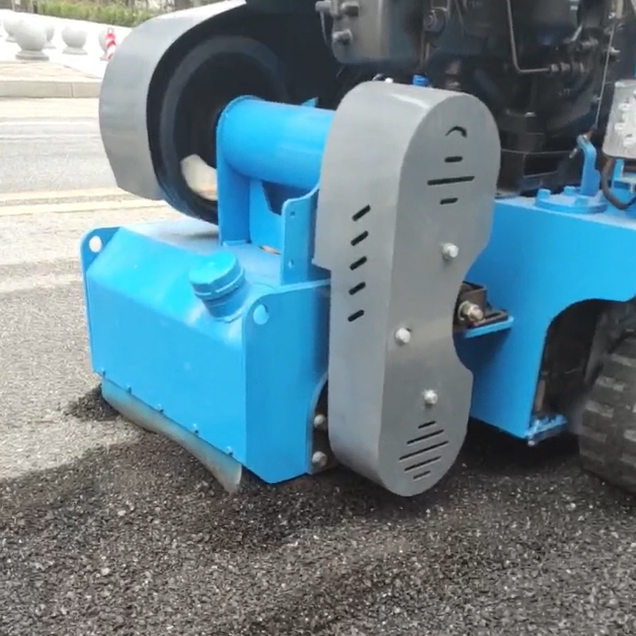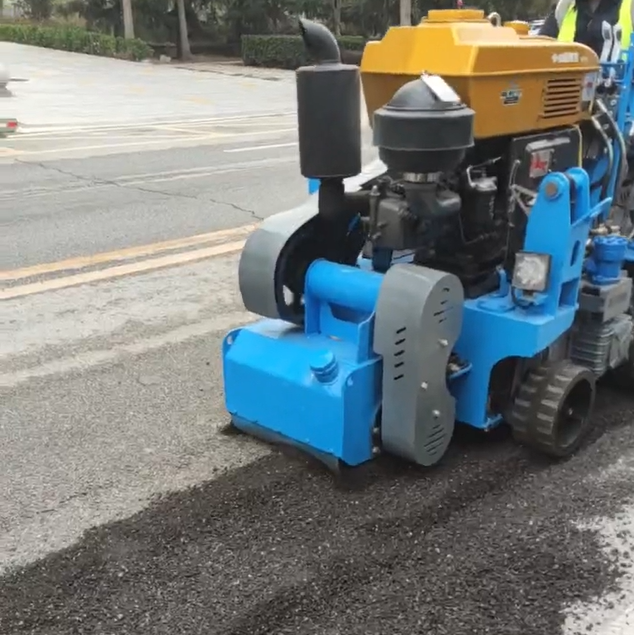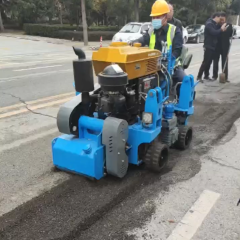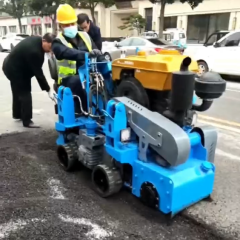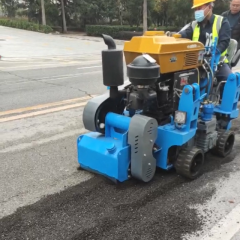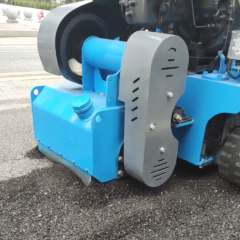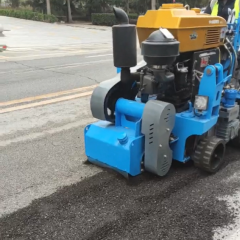
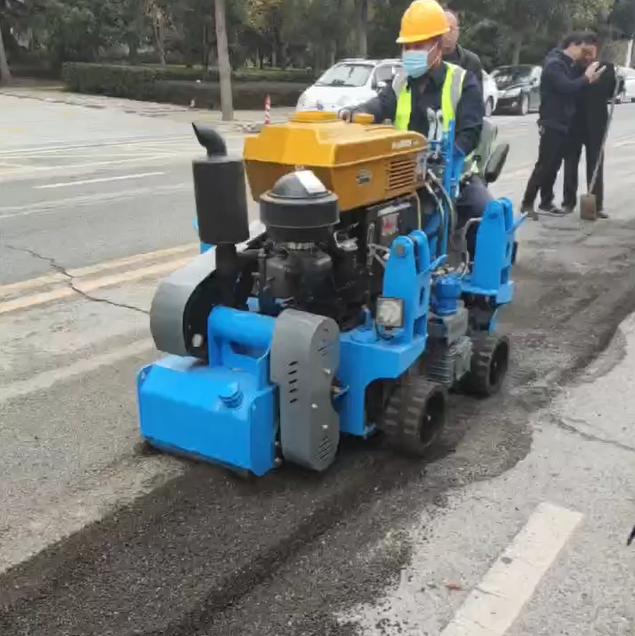
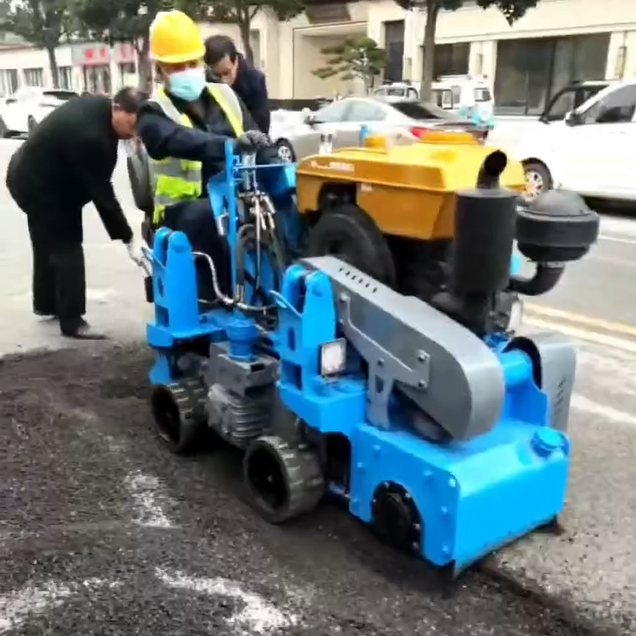
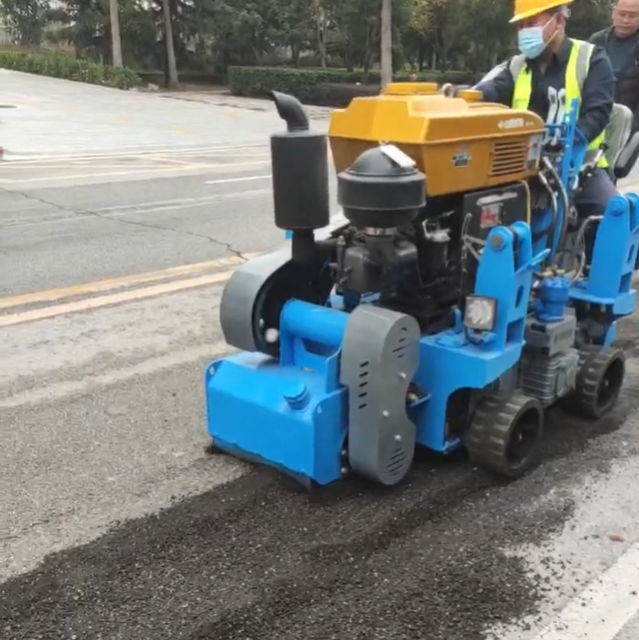
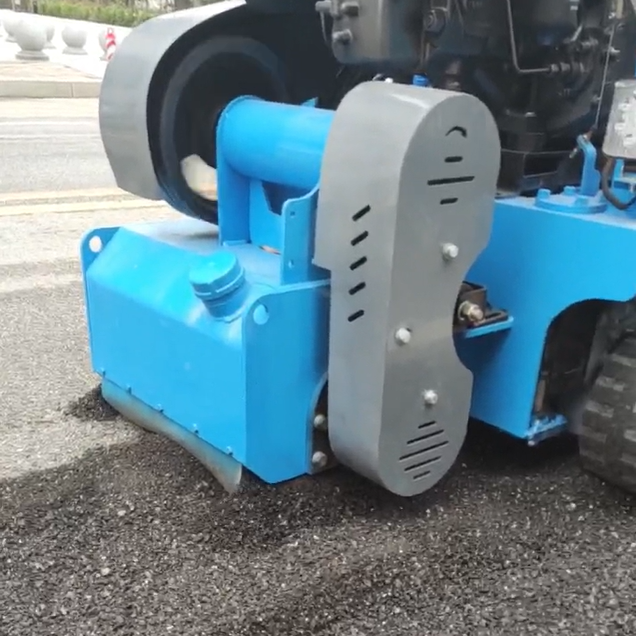
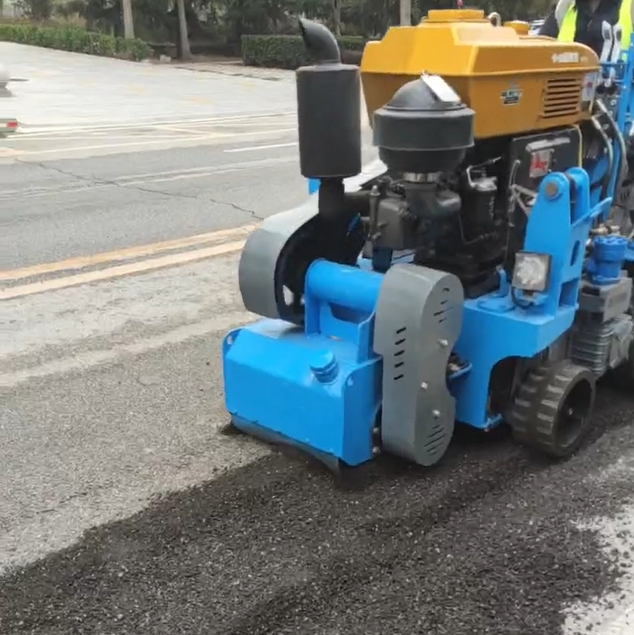
This is a compact, ride-on road milling machine built for asphalt removal in places a truck-mounted miller cannot reach. A cutter drum on a rubber-tracked chassis, driven by a water-cooled diesel through a fully hydraulic transmission, takes the surface down in a single pass — enough to erase ruts, level high spots and leave a bond-ready texture for the next layer. As a cold milling machine for asphalt pavement rehabilitation in built-up areas, it earns its keep where access, not cutting power, is the limiting factor: the chassis is narrow enough to track through a single-width doorway and work inside car parks, service lanes and yard-level loading areas.
It is specced for the crews who actually do this work — municipal street maintenance teams, paving and patching subcontractors, shopping-centre and facilities contractors, utility crews opening trenches in footpaths, and rental fleets that want one machine covering several small-job categories in the same season.
Day to day, one operator rides it to the cut, sets the depth and mills a lane, then lifts the drum to clear covers, kerbs and finished edges before dropping back to depth for the next run. Against a walk-behind grinder it removes material faster and leaves a flatter, more consistent surface across the full cut width. Against a planer attachment on a skid steer, it does the same pavement work on a purpose-built chassis with its own operator platform, a drum width already matched to the job and no swapping between attachments on site.
Tell us the surface type, the access route and the depth band you work to, and we will confirm the drum and pick specification with the road milling machine manufacturer before you order.
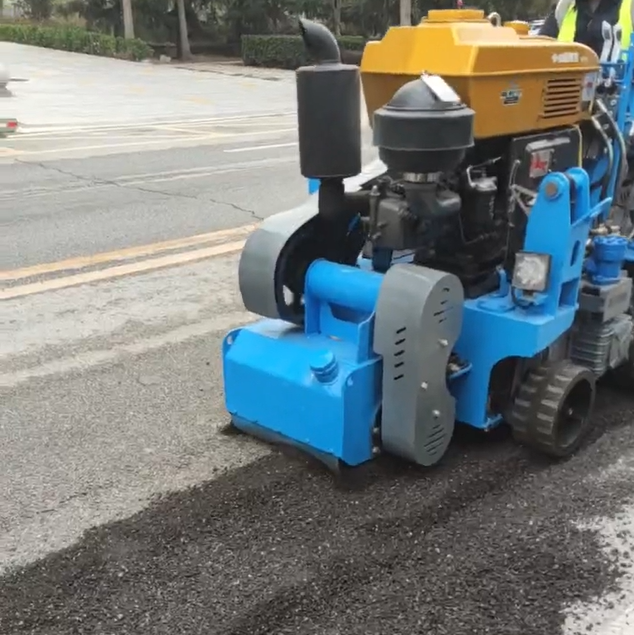
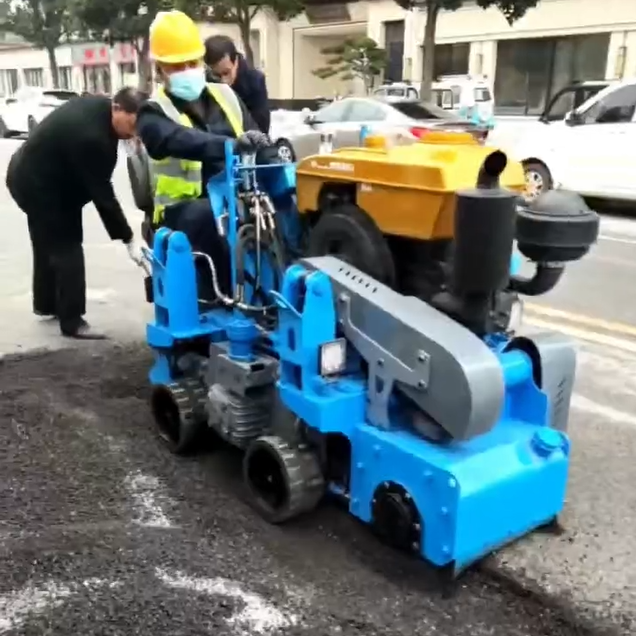
Depth is the part of a cold milling machine for asphalt pavement rehabilitation that decides whether the next layer lasts. This machine works in a single pass, with most overlay-prep work sitting in the 3–40 mm band: around 5 mm to strip oxidised binder ahead of a micro-surfacing lift, 8–10 mm for slurry-seal preparation, 10–20 mm where ruts and shallow failures have to come out, and the deeper end of the range for structural reduction.
Holding a shallow depth evenly across the full cut width is harder than taking a deep cut, because there is nothing to hide behind — a couple of millimetres of variation shows up as a step in the finished surface. The spring-loaded floating front drum holder answers that by letting the drum ride on the substrate and follow micro-irregularities in the pavement, maintaining cutting depth to a tight tolerance across the width of the cut and through long runs.
Depth is set before the pass and stays locked through the run, so a lane is milled at one consistent level rather than drifting as the machine travels. If you are working to a specification that limits how much material can come off in one lift, or you need to hit a particular tolerance before an overlay, give us the numbers and we will confirm what this machine holds on your surface.
| Cutting width | 400 mm |
| Working depth per pass | 3–50 mm |
| Engine | 27 kW (36 hp) water-cooled diesel |
| Drive | Fully hydraulic, rubber-tracked ride-on chassis |
| Cutter drum | 400 mm with 60 tungsten-carbide Kennametal picks in a chevron pattern |
| Depth control | Spring-loaded floating front drum holder, ±1 mm |
| Travel speed | Infinitely variable, 0–40 m/min |
| Operator station | ROPS/FOPS canopy, adjustable suspension seat, armrest joysticks |
| Millings discharge | Optional modular conveyor, 45° swivel left or right |
| Transport width | 900 mm |
| Overall length | 1.6 m |
| Doorway clearance | Fits a 1.2 m opening |
| Certification | CE |
The operator works from a ROPS/FOPS canopy with an adjustable suspension seat, so a full shift on the machine is realistic rather than punishing. Armrest-mounted joysticks keep track speed, drum lift and drum drop under the operator's hands without reaching away from the controls, and track speed is infinitely variable — slow enough to hold a steady feed through a hard patch, quick enough to move between cuts without a separate trip.
The drum is lifted and dropped from the seat, so covers, kerbs, drainage grates and the end of each pass are handled without the operator leaving the platform or shutting the engine down. Emergency reverse sits on the joystick for tight yards and loading areas where the machine has to be walked out of a corner.
Because it rides on rubber tracks, the machine can cross finished concrete and asphalt between cuts without leaving the marks that steel-wheeled plant does. One operator runs the cut while the rest of the crew keeps working behind on the patch or the overlay.
| Job profile | What it means in practice |
| Full-lane highway or motorway rehabilitation | A standard 3.5 m traffic lane is about nine passes with this drum, so the cut has to be made in overlapping passes with the millings loaded out behind the machine. On that work drum width, not engine power, sets the pace — it is a highway-class miller's job. |
| Multi-lane carriageway against a daily tonnage target | Output is drum width multiplied by the number of passes, so a compact unit would hold the lane closed for far longer than a tonnage plan usually allows. If full-width carriageway milling fills most of your season, this is the wrong machine and we would rather tell you before you order. |
| Details and edges on a highway contract | This is where a machine of this size earns its place on highway work. Leave the wide cut to the large miller and put this drum on what it cannot reach — bridge expansion joints, approach slabs, manhole and cover surrounds, kerb lines and densely reinforced sections — instead of cutting those out by hand. |
| Urban lanes, car-park aisles and footpaths | The whole job sits inside the drum. A car-park aisle or a footpath takes a small number of passes, and the machine's compact transport width means the road milling machine reaches the work instead of leaving it for a hand crew at the end of the shift. |
| Patch programmes and utility trenches | Work measured in square metres, patch after patch, where depth matters more than width. This is the ground this machine is bought for — a shallow binder shave, a mid-depth rut removal, or a trench reinstated flush with the surrounding surface. |
| Checking the fit with your own figures | Send the working width you cut, the depth band, the surface type, your daily production target and how many sites the machine moves between in a day. We will come back with the pass layout and a straight answer on whether this drum suits that contract. |
Lovin (Jining Lovin Construction Machinery Co., Ltd.) has supplied machinery buyers since 2017 as a distributor, sourcing through authorised channels and a verified supplier network. One order can cover the machinery mix your customers ask for and leave as a single consolidated shipment. Stocked items dispatch within about 7 days; lead times are confirmed against availability at enquiry, and busy-season schedules are agreed with suppliers in advance. OEM and customised builds follow the same route, and spare and wear parts stay supported after delivery. We export to Europe, South America, the Middle East, Australia, New Zealand and Russia.
Working depth is set in a single pass, from a shallow shave up to the machine's maximum cut; the full range is listed in the specifications. The spring-loaded floating front drum holder keeps the set depth locked across the full cut width as the machine travels, so the result is consistent rather than stepping. If your specification sets a tolerance, tell us the surface and the depth band before you order and we will confirm what the machine holds.
Yes. It fits a single-width doorway with room to track in, and the rubber tracks let it move across a deck without damaging the finished surface. If your access route includes a ramp, a tight turn or a raised threshold, send us the measurements and we will check them against the machine before you commit.
The picks are set in a chevron pattern, so the surface is broken in a staggered sequence rather than in a straight line. That is what keeps chatter marks out of the cut and leaves a textured, bond-ready face for fresh asphalt, epoxy waterproofing or a thin-bond overlay. If your specification calls for a particular surface profile, tell us the requirement and we will match the drum and pick set to it.
Two signs show up first: a chipped or missing carbide tip when you look along the drum, and a cut that starts leaving fine ridges or heavier chatter than it did earlier in the week. Carry a spare set on the machine so a pick is changed on site rather than at the end of the shift. Pick wear is normal on abrasive asphalt and is the cheapest maintenance item on the machine; the drum itself only becomes the concern on high-volume programmes.
The modular conveyor swivels 45° left or right and loads the millings straight into a 10 t tipper, so nothing is left in a windrow behind the machine for a second machine to clear. On a lane closure that removes the clean-up pass and can reduce the time the lane is shut by up to 40%. Machines without the conveyor leave the millings behind the drum for a loader or sweeper to handle.
No, and it is not built to be. Full-lane, high-production highway milling belongs to a large miller with a much wider drum; a compact road milling machine is bought for the work those machines cannot reach or cannot justify — deep car-park lanes, footpaths, cycle lanes, bridge-deck and expansion-joint repairs, utility trenches and patching programmes where the machine is moved between small sites every day. It is built for urban rehabilitation rather than highway production. If you are weighing this compact miller against a larger unit for a specific contract, send us the site details and the daily production target and we will tell you honestly which one fits.