• Crawler Scissor Lift Platform,Manufacturer of Skid Steer Attachments, Forestry Mulcher, Remote Control Lawn Mower ...
  • Crawler Scissor Lift Platform,Manufacturer of Skid Steer Attachments, Forestry Mulcher, Remote Control Lawn Mower ...
  • Crawler Scissor Lift Platform,Manufacturer of Skid Steer Attachments, Forestry Mulcher, Remote Control Lawn Mower ...
  • Crawler Scissor Lift Platform,Manufacturer of Skid Steer Attachments, Forestry Mulcher, Remote Control Lawn Mower ...

Crawler Scissor Lift Platform

Crawler Scissor Lift Platform, lifting height 4-12m

Applications:

  • High building, construction working

  • Construction sites, outdoor lifting operating.
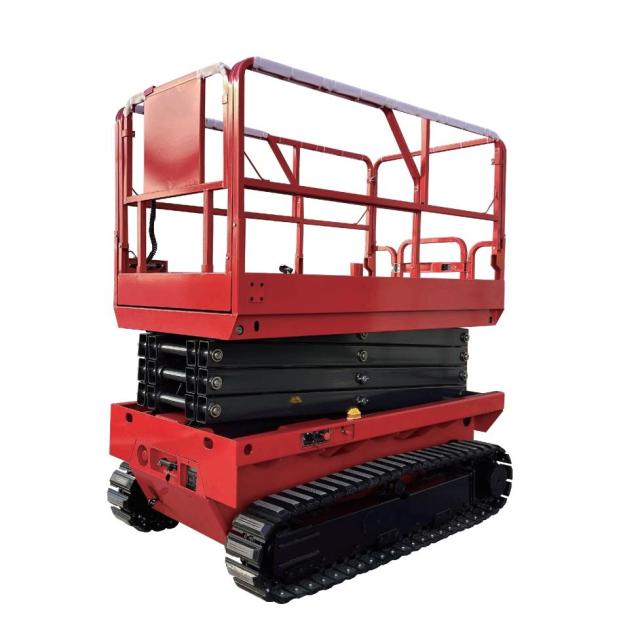
 
Efficient and reliable aerial passageways and crawler walking scissor lift platforms ranging from 4 to 12 meters
The Lovin crawler scissor lift platform, ranging from 4 to 12 meters, is designed to provide enhanced maneuverability and versatility for air missions. This scissor lift platform can achieve smooth and safe lifting in a wide range of industrial and commercial environments. Its height range is from 4 meters to 12 meters, making it an ideal choice for tasks such as maintenance, construction and warehouse management. This electric lifting platform combines high performance with ease of operation to ensure the highest efficiency.
  • Crawler Scissor Lift Platform,Manufacturer of Skid Steer Attachments, Forestry Mulcher, Remote Control Lawn Mower ...
  • Crawler Scissor Lift Platform,Manufacturer of Skid Steer Attachments, Forestry Mulcher, Remote Control Lawn Mower ...

Description

Product Overview

The Lovin crawler scissor lift platform is an electric aerial work platform available in several working heights and platform load ratings, depending on the version you specify. It raises and lowers a guarded work basket on a scissor stack, and it travels on a crawler walking chassis rather than rubber tyres.

Why the tracks matter. On gravel, packed earth, sand, a building apron or a slab that has only just been broken up, a wheeled lift has to be towed into position and then levelled on packers before anyone can go up. A crawler chassis keeps traction and stays stable on that same ground, and because the undercarriage is low and narrow the machine can be walked through a gateway, along a service corridor or into a yard corner where a wheeled platform will not go. That combination is what makes this a track mounted scissor lift for rough terrain rather than a warehouse lift with a different set of wheels.

What it is used for. Construction crews take the taller versions onto high building work — façades, cladding, glazing, services and roof-edge access. Outdoor maintenance teams use the mid-range units for street and yard lighting, signage, gantries and tree work. Plant and facility teams use the shorter units inside large sheds and industrial halls, where the electric drive means no fumes at the work position and very little noise.

What it replaces. On most sites this platform stands in for a scaffold tower that takes two people half a day to erect, or for a wheeled scissor lift that cannot reach the work area over the ground in between. It also removes the need to bring in a crane for jobs that go straight up rather than out and over.

Who it suits. Rental fleets that hire into rough or new-build sites, general and façade contractors, municipal maintenance departments, and plant engineers who need one machine that can be used indoors and in the yard on the same day.

Tell us the working height you need, the load you will put on the deck and the ground you will work from, and we will confirm with the crawler scissor lift platform manufacturer which version fits, including the platform size and the undercarriage that suits your site.
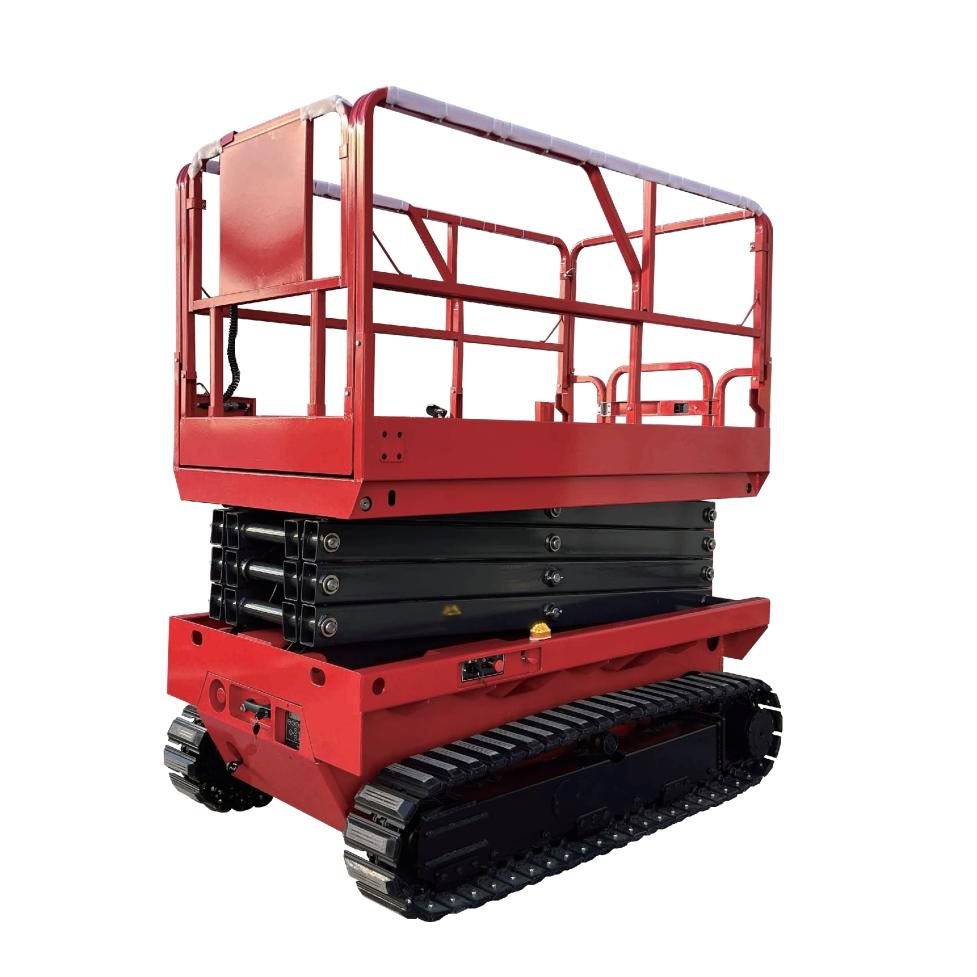
Crawler Chassis & Ground Performance

Product image from original description, details unavailable.
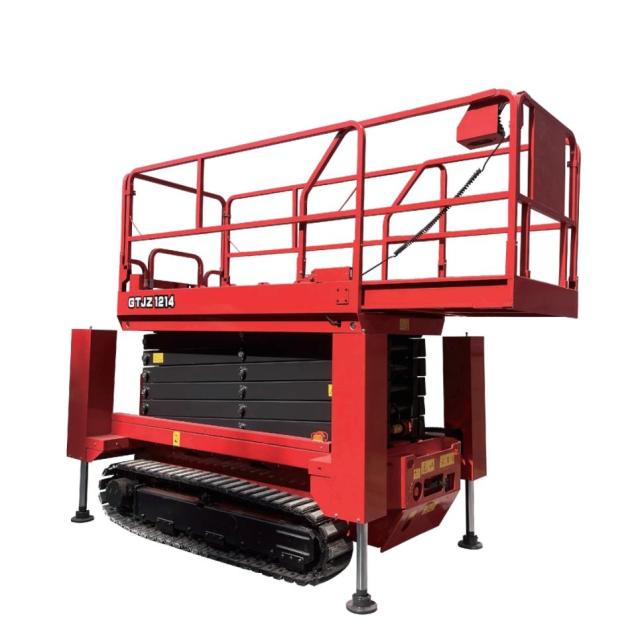
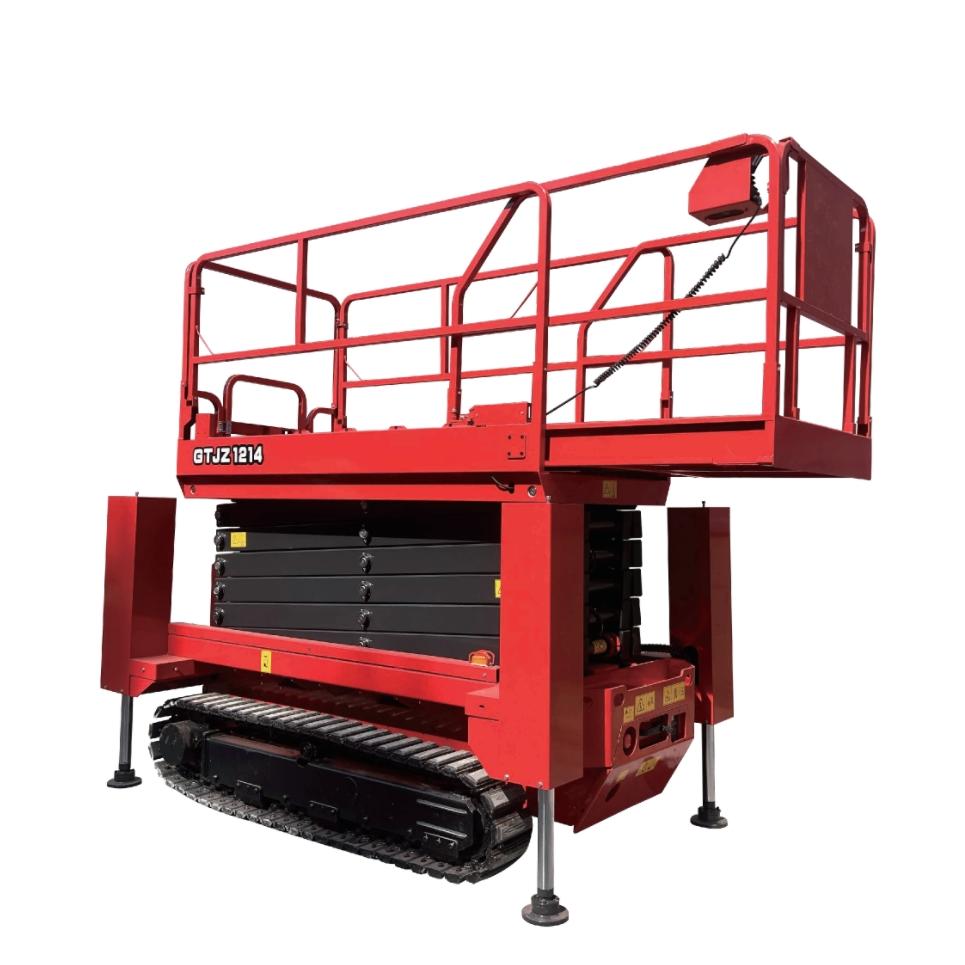
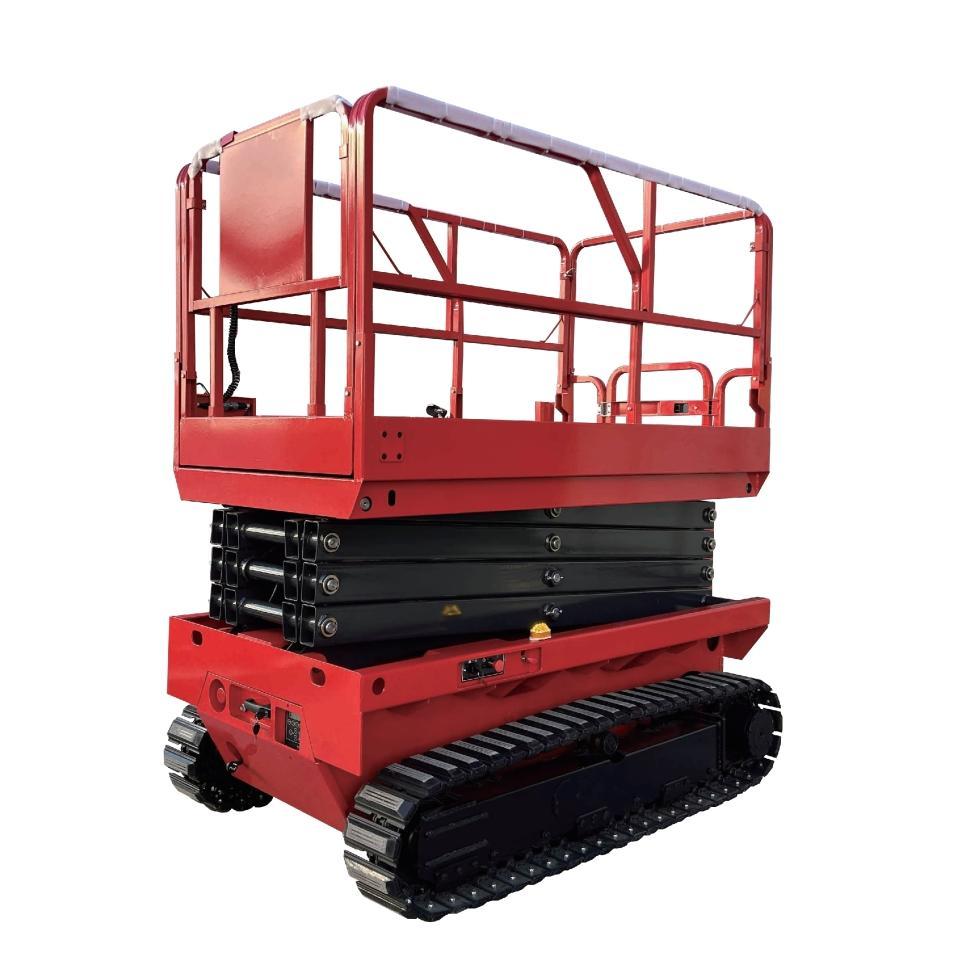
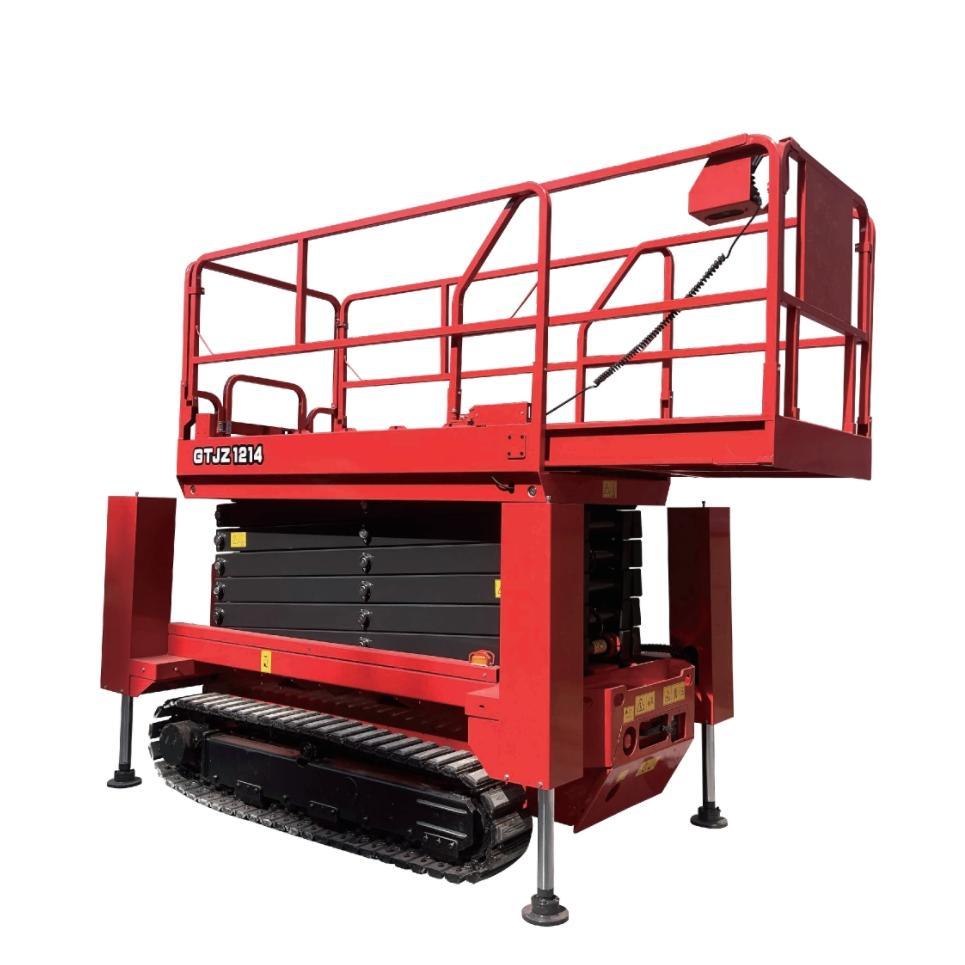
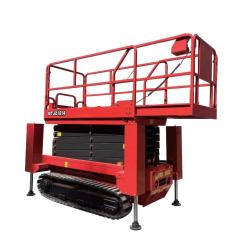
Red crawler scissor lift with black tracks and railed basket.Red tracked scissor lift with outriggers deployed and GTJZ1214 code.
  • Rubber crawler tracks instead of tyres. The undercarriage spreads the machine's weight across a long track footprint, so it keeps grip and stays upright on gravel, packed earth, sand, wet grass and broken concrete where a wheeled lift would spin or sit unevenly.
  • Manoeuvring in tight space. The tracked chassis turns within a short radius, which lets an operator walk the platform along a service corridor, between two rows of plant, or into the corner of a yard and then set up without repositioning the machine again.
  • Crossing ground that stops a wheeled lift. Rutted tracks, soft shoulders, a temporary access road and a site where the hardstanding has not been laid yet are all normal going for a tracked machine, and they are exactly where a wheeled platform is turned away.
  • Indoors as well as out. The same undercarriage runs on a finished concrete factory floor or a warehouse slab, so one machine covers work inside a hall and work in the yard without swapping equipment.
  • A wheeled version for level floors. The crawler scissor lift platform manufacturer also supplies some versions on wheels rather than tracks for easy movement by hand across flat, hard floors. If your work is mainly indoors on finished concrete, tell us and we will confirm which version fits your floors and doorway widths.
  • What to tell us about your ground. Loose gravel, standing water, deep mud, a ramp or a step between two levels all change what the chassis has to do. Describe the surface and the access route and we will confirm the version that handles it, along with the pads your outrigger feet will need.
  • Track care is simple. Clearing stone, wire and caked material out of the track assemblies after a shift, and checking the assemblies for damage during the daily walk-round, is what keeps a tracked machine reliable.

Specifications at a Glance

ParameterSpecification
Lifting height4 m to 12 m (customisable)
Platform load capacity230 kg / 320 kg / 450 kg
Platform (table) size1120 × 2270 mm
Power supplyBattery powered
Lift driveElectric hydraulic
Lift mechanismScissor stack
ChassisCrawler walking undercarriage
StabilisersExtendable outrigger legs with foot pads
Work basketEnclosed guardrails with hinged entry gate
ControlsControl box on the deck with coiled cable
Working environmentIndoor and outdoor
Typical applicationsHigh building work, construction sites, outdoor lifting

Build, Durability & Finish

This is a machine from a crawler scissor lift platform manufacturer, built for industrial work rather than occasional use. The chassis, the scissor arms and the basket frame are fabricated in steel and finished in a red powder coat, with the scissor arms and undercarriage in matte black — a finish that copes with outdoor UV and repeated washing down after dusty or salty work.

Designed around heavy-duty cycles. The platform is rated to lift its full load to the top of its range, again and again, on a construction or industrial site. The scissor stack, the pivot pins and the hydraulic cylinder are sized for the load they carry rather than for light, occasional use, and the deck is stiff enough that it does not flex under a working crew and their tools.

Weather and site conditions. Outdoor work exposes a machine to rain, grit and dust, and indoor work exposes it to impacts from trolleys and plant. The steel structure and the enclosed hydraulic components are specified for both, so the machine is not restricted to a clean hall or a dry yard.

Wear parts, not throwaway parts. The items that wear on a scissor platform — pins, bushings, hydraulic hoses, track assemblies and the guardrail fittings — are replaceable, so a busy machine can be brought back into service instead of being written off after a few hard years.

The routine is what gives it the life. Washing the machine down, greasing the pivot points and checking the hydraulic system on a fixed schedule is what separates a machine that lasts a season from one that lasts a decade. The lubrication intervals and the recommended grease are set out in the manual that ships with each unit.

Capacity is built in, not added later. State your heaviest realistic deck load when you order — people, tools and material together — because the rating you specify is the one the structure, the hydraulics and the safety devices are built around.

Safety Systems for Aerial Work

  • Enclosed guardrail basket. Vertical rails run all the way round the work basket, with a hinged entry gate that closes behind the operator before the lift starts.
  • Anti-slip platform surface. The deck surface is finished anti-slip so boots keep their grip when the operator turns, kneels or works close to the edge.
  • Automatic safety brakes. The machine holds its position if a control is released or power is interrupted, so the basket does not drift down while someone is working.
  • Emergency stop. A stop button on the deck control box halts the lift immediately, within reach of the operator.
  • Overload protection. The platform cannot be worked above its rated load — on a 230 kg version that limit arrives sooner than most crews expect, so keep tools and material inside the rating.
  • Safety guards on the scissor stack. The moving parts of the scissor mechanism are guarded so that hands, clothing and loose material cannot reach them as the stack closes.
  • Outriggers are a safety item, not a convenience. No lift starts until all four legs are deployed, locked and their feet are on solid, consolidated ground. On soft or made ground, use a load-spreading pad under each foot.
  • Load and warning markings. The rated load and the warning decals are marked on the deck so the operator can check the limit before loading up.
  • A short check before every lift. Gate closed, load inside the rating, outriggers set and pinned, deck edges clear, and nothing overhead within the basket's travel. It takes a minute and it is the difference between a routine lift and an incident.

Lifting & Height Control

  1. Walk the machine to the work position on its tracks, then deploy all four outrigger legs and check that every foot pad sits on firm, consolidated ground.
  2. Set the base level on the outriggers, confirm the basket gate is closed, and make sure the deck load is inside the rated capacity before anything goes up.
  3. Check the space above through the full height of travel — cables, pipework, beams, tree limbs and any overhead line should be clear of the basket path.
  4. Start the platform from the control box on the deck. The control box is connected by a coiled cable, so the operator runs the machine from where the work is rather than from the ground.
  5. Raise to height. The electric hydraulic system drives the scissor stack upward smoothly and without the jolts of a single-ram lift, and the adjustable height control lets the operator stop at the exact level the job needs instead of at fixed steps.
  6. Work from the basket with the load balanced and the gate closed, then lower the platform through its full travel — and only then retract the outrigger legs and move on to the next position.

Electric Hydraulic Drive & Emissions

Electric hydraulic power. A battery pack drives an electric hydraulic system that raises and lowers the platform. Pumps and cylinders do the lifting, so the motion is smooth and controllable rather than the on-off surge of an engine driving a mast, and there is no fuel engine to service — no engine oil changes, no fuel filters, no exhaust system.

Quiet enough for occupied sites. Because the drive is electric, the machine can work on a residential street, in a hospital or school yard, inside an occupied building or on a night shift without the noise penalty of a diesel platform. That matters as much as the height when a council, a facility manager or a commercial landlord signs off on the work.

No exhaust at the work position. Electric operation means no fumes where the operator is standing, which is why the shorter versions of this platform are used inside factories, industrial halls and large commercial units as well as outdoors.

Lower running cost than a fuel platform. Charging the machine from site power costs less than fuelling a diesel engine, and there is no engine servicing to budget for across the year. The trade is that the machine works from its battery rather than a fuel tank, so charging has to be planned into the shift pattern.

Why the range is electric. The company's own operations are run with energy consumption kept to a minimum, and the electric range exists for the same reason: machinery that does its work without emissions at the point of use lets our customers cut their own footprint while keeping the same output.

What to confirm about the power arrangement. Battery capacity, charging arrangement and how many working hours you get per charge depend on the version and the cycle you run. Tell us your shift pattern and charging point, and we will confirm the power configuration for your site before you order.

Applications on Site

  • High building work. Façade access, cladding and glazing, painting and roof-edge work where a scaffold would block the site and a wheeled platform cannot cross the ground to reach the elevation.
  • Construction and civil sites. Services installation, steelwork bolting, formwork checking and snagging at height, on ground that is still unfinished or has just been dug over.
  • Warehousing and logistics. Racking, lighting, door and roof maintenance inside a distribution centre at low to mid heights, where the electric drive can be used indoors and the tracks are walked across the concrete rather than driven.
  • Manufacturing and assembly plants. Overhead conveyor, crane gantry, ductwork and press maintenance without shutting the line down to erect a scaffold.
  • Automotive workshops and depots. High-bay work on trucks and bodywork, signage and canopy fixings in a yard with an uneven or gravelled surface.
  • Commercial premises, hospitality and public buildings. Atrium lighting, signage, air-conditioning and glass work in occupied buildings where noise and exhaust have to be kept down.
  • Sanitation and grounds work. Tree pruning along a road, street lighting, park structures and estate maintenance, where the machine has to be set up on verges and grass rather than on kerb.
  • Rental fleets. One machine that can be delivered into a rough yard, a new-build site or an occupied building covers more hires than a wheeled lift, and the tracked chassis means fewer call-outs to a machine that cannot reach the work.

Enquiry to Handover

  1. Tell us the job: the working height you need, the load you will put on the deck, indoor or outdoor use, the ground you work from, the access width on site, and how many units you are planning.
  2. We come back with the version that fits your specification — height, capacity, deck size, undercarriage and power supply — and with the build details that apply to it.
  3. If your work sits outside the standard height band, it is handled as a custom build through the same process, so you still get one specification, one contact and one shipment.
  4. Once you confirm, the order is placed to that agreed specification and production is scheduled against it.
  5. Quality is monitored at each stage of the build, rather than being left to a final look at the end.
  6. The finished machine goes through complete-unit inspection and is released against your confirmed order, with its operating and maintenance manual.
  7. On arrival we support installation and commissioning, so the machine is set up correctly the first time rather than by trial and error.
  8. We provide operator training as part of the handover, so your crew learns the controls, the load limits and the outrigger routine before the platform goes into daily service.
  9. After that, service, wear parts and technical answers continue for the life of the machine, and the same sales contact stays with the account.

Long-Term Supply & Global Support

  • What you can buy from us. Alongside this platform, the range covers electric and diesel forklifts, stackers and pallet trucks, boom lifts and other scissor lifts, skid steer and tractor attachments, and road maintenance equipment. Buyers who start on one line usually come back for the next one.
  • Global distribution. The products are available in more than 30 countries, so export handling and after-sales contact are routine rather than new ground for each market you sell into.
  • Backed by the maker, not just the seller. We stay close to the crawler scissor lift platform manufacturer on every batch, so parts, drawings and build details stay consistent order after order instead of drifting between shipments.
  • After-sales support. Our service team supports the machine from installation through to maintenance, so a fault at month eighteen is handled the same way as a question in week one.
  • Spares and wear parts. Ask for the wear-part list for the version you order, so you can hold the fast-moving items — pins, bushings, hydraulic parts, track components and electrical items — on site rather than parking the machine while you wait.
  • Technical answers from one contact. One person handles your enquiry from specification through to delivery, which is what keeps repeat orders and fleet replacements straightforward.
  • Long-term supply. Buyers who start with one machine often add a second or third, and the specification is kept on file so the next unit matches the ones already working in your fleet.

Ordering & Delivery

  • In-stock units dispatch within 7 days. Machines held in stock leave within 7 days of the order being confirmed. If your specification has to be built, the schedule is confirmed when the specification is agreed.
  • Logistics & Shipping – global export expertise. Our export team arranges freight booking, documents and handover, whether the shipment moves with your forwarder or ours.
  • What to send with your enquiry. Working height, platform load, indoor or outdoor use, the ground conditions on site, the access width for delivery and set-up, and the quantity you are planning.
  • Packing. Units are prepared for sea freight in export packing; tell us if your market or your own handling needs anything specific, such as additional crating or protection, and we will confirm what can be arranged.
  • Custom builds. Working heights outside the standard range are quoted as custom orders — send the specification with the enquiry and we will confirm what can be built.
  • Spares on the first order. Ask about adding a wear-part and filter set to your first shipment, so the machine is not waiting on a part during its first busy season.
  • Documents. The packing list and shipping documents travel with the shipment; tell us which documents your market requires and we will confirm what can be provided.
  • Terms to confirm. Pricing, payment method and the commercial terms that apply to your order are quoted individually — confirm them with your sales contact before you commit.

Portable Design

Some models come with wheels for easy mobility, making them easier to reposition between tasks. Typical applications include high building, warehousing and logistics, manufacturing and assembly lines, automotive repair and maintenance, construction sites, commercial and hospitality, and sanitation tree pruning.

Enhanced Mobility for Easy Transportation

Equipped with a crawler walking function, this electric lifting platform allows for easy operation on various terrains. The crawler walking design ensures that the operator can move the platform effectively even in a narrow space. This function is particularly beneficial for navigation in warehouses, factories and outdoor areas where traditional elevators might encounter difficulties.

Sustainability Measures

At Lovin, sustainability is at the core of our operations. We are committed to reducing the environmental impact of our products through energy-efficient production, where our facilities are designed to minimize energy consumption and ensure an eco-friendly manufacturing process, and through electric solutions, where our electric forklifts and other products help businesses reduce their carbon footprint by providing an efficient, zero-emission alternative to traditional machinery.

Supply Chain & Delivery Assurance

Lovin (Jining Lovin Construction Machinery Co., Ltd.) has supplied machinery buyers since 2017 as a distributor, sourcing through authorised channels and a verified supplier network. One order can cover the machinery mix your customers ask for and leave as a single consolidated shipment. Stocked items dispatch within about 7 days; lead times are confirmed against availability at enquiry, and busy-season schedules are agreed with suppliers in advance. OEM and customised builds follow the same route, and spare and wear parts stay supported after delivery. We export to Europe, South America, the Middle East, Australia, New Zealand and Russia.

FAQ

Q1. What working height should I specify?

The platform is available in a range of working heights, and the version you choose should follow the highest point on your regular jobs rather than the highest point you can imagine reaching. Work that stays under a mezzanine or inside a factory hall is usually covered by the more compact models, which are quicker to set up. Façade work, high building access and street or yard lighting usually need the taller versions. Working height is customisable, so if your work falls outside the standard range, send the figure and we will confirm the options.

Q2. How much can the deck carry?

The deck is rated for a range of platform loads depending on the version you choose; the exact figure for your machine is listed in the specifications. In practice the rating has to cover the operators, their tools and any material being installed — a crew plus a glazing panel or a lighting unit adds up faster than most people expect. Match the rating to the heaviest realistic combination on your site rather than to an average day, and check it against your own load list before ordering.

Q3. Will it handle rough or uneven ground?

That is exactly what the tracked chassis is for. A crawler scissor lift walks on rubber track assemblies rather than tyres, so it keeps traction on gravel, packed earth, sand, wet grass and broken concrete, and the extendable outriggers then set the base level before the basket goes up. On a slope, soft ground or a yard with a camber, each outrigger foot needs a firm patch beneath it, so use a load-spreading pad if the surface is loose. If your work is always on hard level floors, tell us — a wheeled version may suit you better than a track mounted scissor lift for rough terrain.

Q4. Can it be used indoors?

Yes. The drive is electric and battery powered, so there are no exhaust fumes at the work position and very little noise, which is why the shorter versions of this platform are used inside factories, halls, warehousing and order-picking buildings and distribution centres as well as outdoors. The one thing to check first is the floor: the tracks spread the load along the undercarriage, but on a polished or lightly built slab confirm the point loading with us before walking the machine across it.

Q5. How is the platform controlled from the basket?

The control box sits on the deck and connects by a coiled cable, so the operator raises and lowers the platform from where the work is rather than signalling to someone on the ground. Because the height control is adjustable, the operator can stop at the level the job actually needs instead of stepping up through fixed positions, and the emergency stop sits with the other controls for immediate use.

Q6. What routine checks does the machine need?

Treat it like any tracked machine: a short walk-round before each shift, and a scheduled service at the intervals in the manual. The walk-round covers the track assemblies for damage or packed-in debris, the hydraulic system for leaks, the guardrail fixings and the basket gate, the outrigger legs and their foot pads, and the battery charge level before a long lift. Keep the pivot points greased on schedule and wash the machine down after dusty or salty work. The exact lubrication intervals and the recommended grease are in the manual supplied with the unit.

Q7. Can the working height be changed for my project?

Working height is customisable. The platform is available in a standard range, and if your regular work sits above or below it — a tall shaft, a low plant room, a run of identical lifts that always stops at the same level — describe the space and the load and we will confirm the options and what they change about the machine.
CONTACT US

If you have any queries, get in touch today! Don't hesitate. We try to take the extra step for our customer satisfaction.
Name *
Email *
Message *
Verification Code *
Click to verify
Message Us