• Manual Mobile Scissor Lifting Platform for Aerial Building,Manufacturer of Skid Steer Attachments, Forestry Mulcher, Remote Control Lawn Mower ...
  • Manual Mobile Scissor Lifting Platform for Aerial Building,Manufacturer of Skid Steer Attachments, Forestry Mulcher, Remote Control Lawn Mower ...
  • Manual Mobile Scissor Lifting Platform for Aerial Building,Manufacturer of Skid Steer Attachments, Forestry Mulcher, Remote Control Lawn Mower ...
  • Manual Mobile Scissor Lifting Platform for Aerial Building,Manufacturer of Skid Steer Attachments, Forestry Mulcher, Remote Control Lawn Mower ...
  • Manual Mobile Scissor Lifting Platform for Aerial Building,Manufacturer of Skid Steer Attachments, Forestry Mulcher, Remote Control Lawn Mower ...
  • Manual Mobile Scissor Lifting Platform for Aerial Building,Manufacturer of Skid Steer Attachments, Forestry Mulcher, Remote Control Lawn Mower ...
  • Manual Mobile Scissor Lifting Platform for Aerial Building,Manufacturer of Skid Steer Attachments, Forestry Mulcher, Remote Control Lawn Mower ...
  • Manual Mobile Scissor Lifting Platform for Aerial Building,Manufacturer of Skid Steer Attachments, Forestry Mulcher, Remote Control Lawn Mower ...

Manual Mobile Scissor Lifting Platform for Aerial Building

Manual Mobile Scissor Lift Table (Electric Hydraulic Platform Lift)

Applications: 
   
    outdoor indoor building lifting platform

  • Warehousing and logistics

  • Manufacturing and assembly lines

  • Automotive repair and maintenance

  • Construction sites

  • Retail and hospitality industries
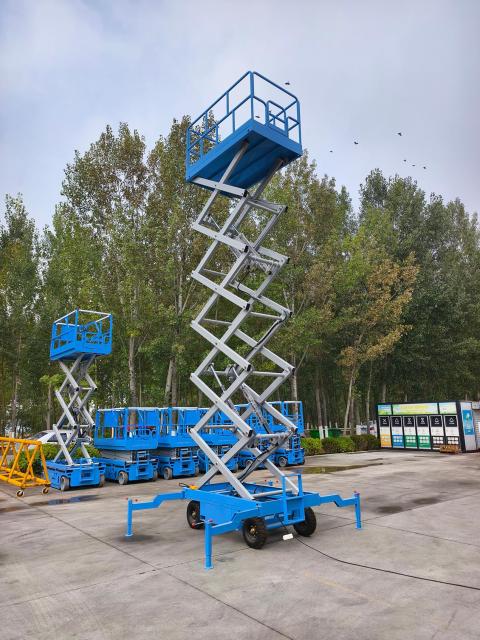
    Portable platform lift

  • Manual Mobile Scissor Lifting Platform for Aerial Building,Manufacturer of Skid Steer Attachments, Forestry Mulcher, Remote Control Lawn Mower ...
  • Manual Mobile Scissor Lifting Platform for Aerial Building,Manufacturer of Skid Steer Attachments, Forestry Mulcher, Remote Control Lawn Mower ...
  • Manual Mobile Scissor Lifting Platform for Aerial Building,Manufacturer of Skid Steer Attachments, Forestry Mulcher, Remote Control Lawn Mower ...
  • Manual Mobile Scissor Lifting Platform for Aerial Building,Manufacturer of Skid Steer Attachments, Forestry Mulcher, Remote Control Lawn Mower ...

Description

Product Overview

The manual mobile scissor lift is a wheeled lift table that raises people, tools and materials from the ground to the point where the work actually is. An electric motor drives a hydraulic pump, the pump feeds the cylinder inside the scissor stack, and the platform rises smoothly and stops where you set it. Nothing is lifted by hand and nothing has to be carried up a ladder.

It is built for the jobs where erecting scaffolding takes longer than the work itself, and where a truck-mounted platform cannot get close enough. Window and facade repairs, signage and lighting, ceiling services, mezzanine loading and machine access all sit inside its working range, indoors in an occupied building or outdoors on a paved yard. Because the drive is electric there are no exhaust fumes to manage when the lift is used inside a warehouse, a shop or a plant that stays open while you work.

As a manual hydraulic scissor lift platform for building maintenance crews, it stays deliberately simple: wheel it to the job, set the outriggers, plug it into the site supply and raise the platform. The same platform doubles as a lift table at ground level, bringing a heavy component up to bench height instead of lifting it by hand — the carrying and the climbing are taken out of the task, which is where the time and the strain usually sit.

The mobile units are built across a wide working-height range, and each one is made for the height, the deck size and the supply at the site where it will work. Tell us the highest point you have to reach and what will stand on the platform, and we match the build to it.

Electric Hydraulic Drive System

  • Electric-hydraulic drive: on a manual hydraulic scissor lift platform for building maintenance, an electric motor turns the hydraulic pump and the pump moves the cylinder that opens the scissor stack, so the platform travels steadily instead of in steps.
  • Quiet in service: there is no engine running under the deck, which is what makes the unit usable inside an occupied building, a shop or a plant where a diesel machine would be too noisy and too dirty.
  • No fuel to handle: nothing is stored or refuelled on site, and there is no exhaust to route away from the working area.
  • Low routine service: there is no engine oil, air filter or drive belt to replace; the work that does come round is hydraulic — oil level, hoses, seals — plus the wheels and the outrigger fittings.
  • Fine control at the deck: the platform can be inched up and stopped exactly where the job needs it, which matters when you are aligning a load with a rack, a machine bed or a mezzanine edge.
  • Built around your supply: every unit is configured for the power available where it will work, so tell us at enquiry whether the site runs single-phase or three-phase and the lift is built to suit.
  • Comfortable with short repeated cycles: lifting a pallet, working on a fitting and coming back down is exactly the duty this drive handles all shift.

Scissor Mechanism & Level Lifting

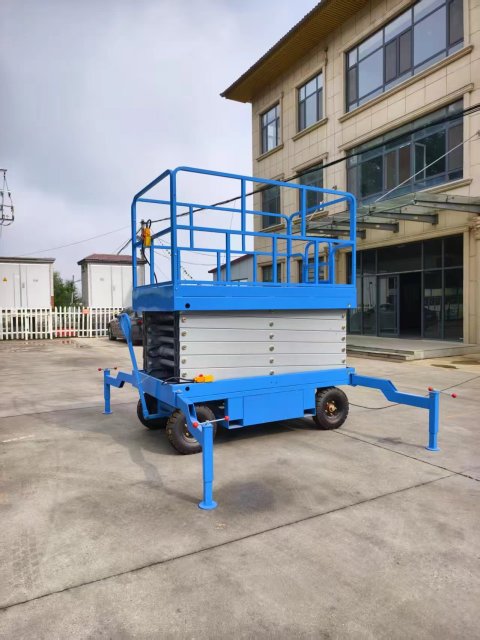
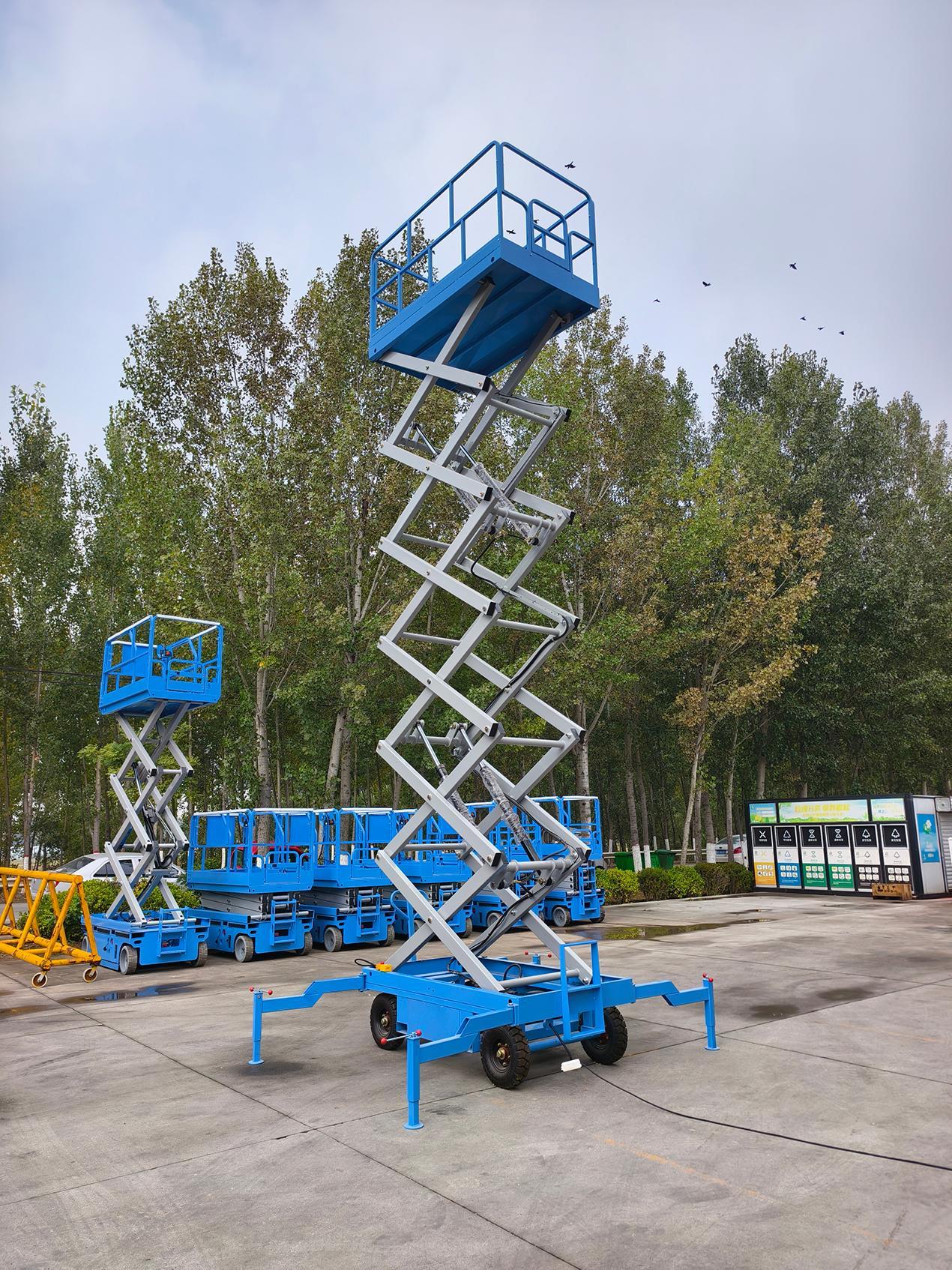
The lifting action comes from the scissor stack: pairs of steel arms pinned at their centres open and close, and the platform rides straight up and down on top of them. Because the arms travel vertically rather than on an arc, the deck stays level through the whole stroke — the operator is not standing on a slope and a pallet does not creep towards one side.

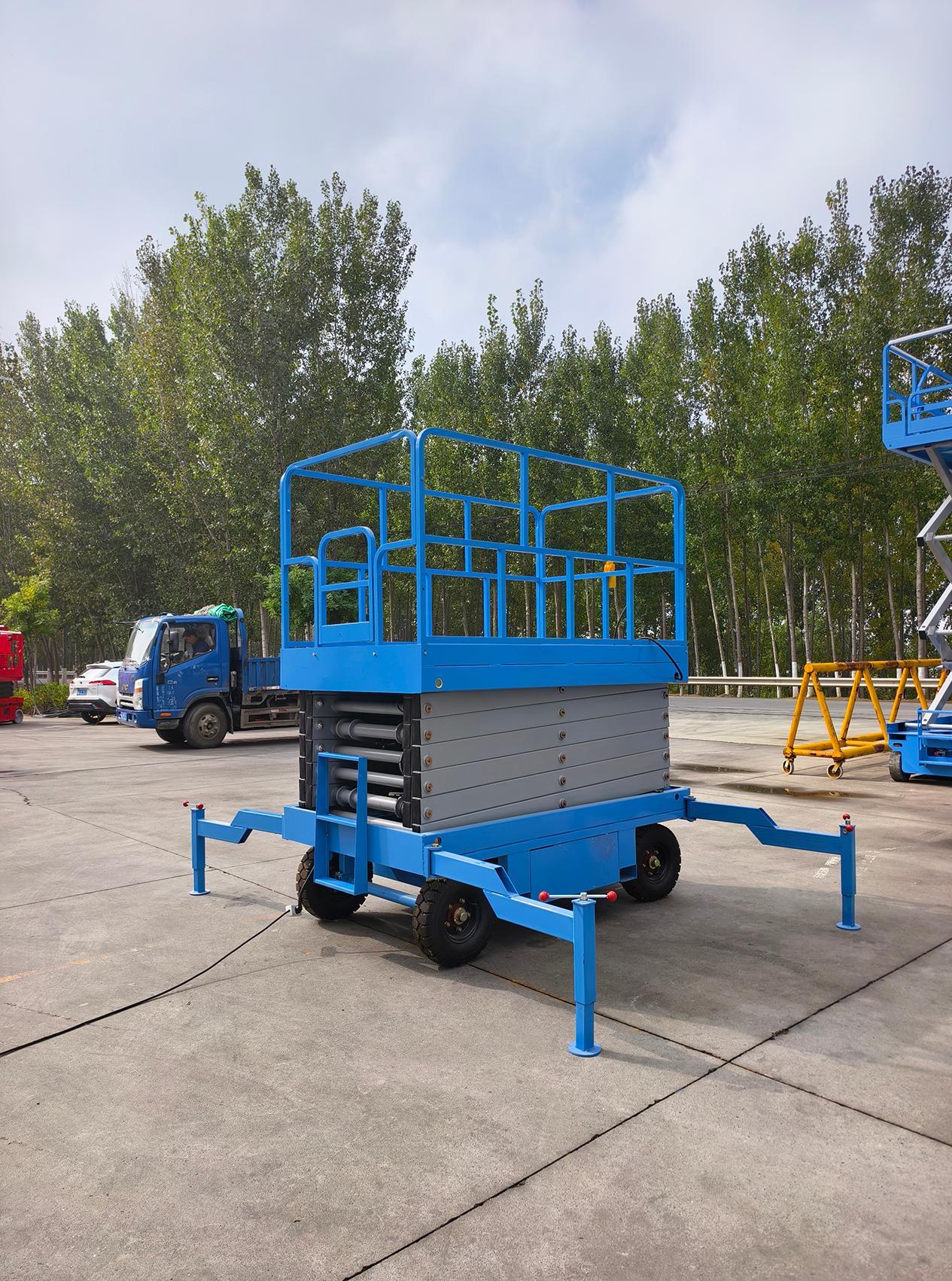
That vertical path is also why the machine is compact when it is standing. At rest the arms fold into a low stack under the platform, so a unit can be parked against a wall or rolled through a service door without the footprint a boom lift would take.

The load path runs from the deck, through the arm pins, into the base frame and down through the outrigger feet into the ground. That is why a firm, level standing position matters more than anything else at setup.

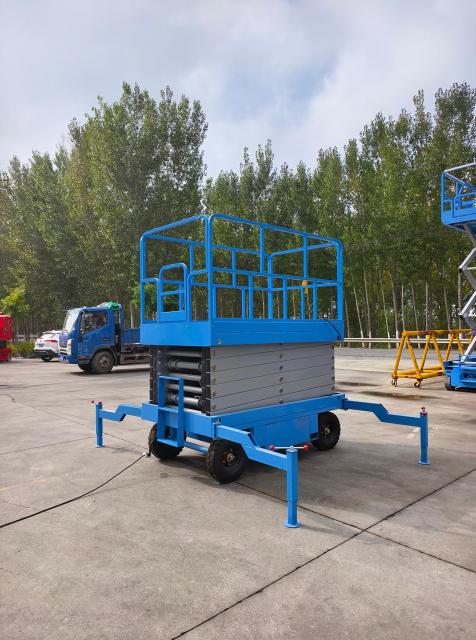
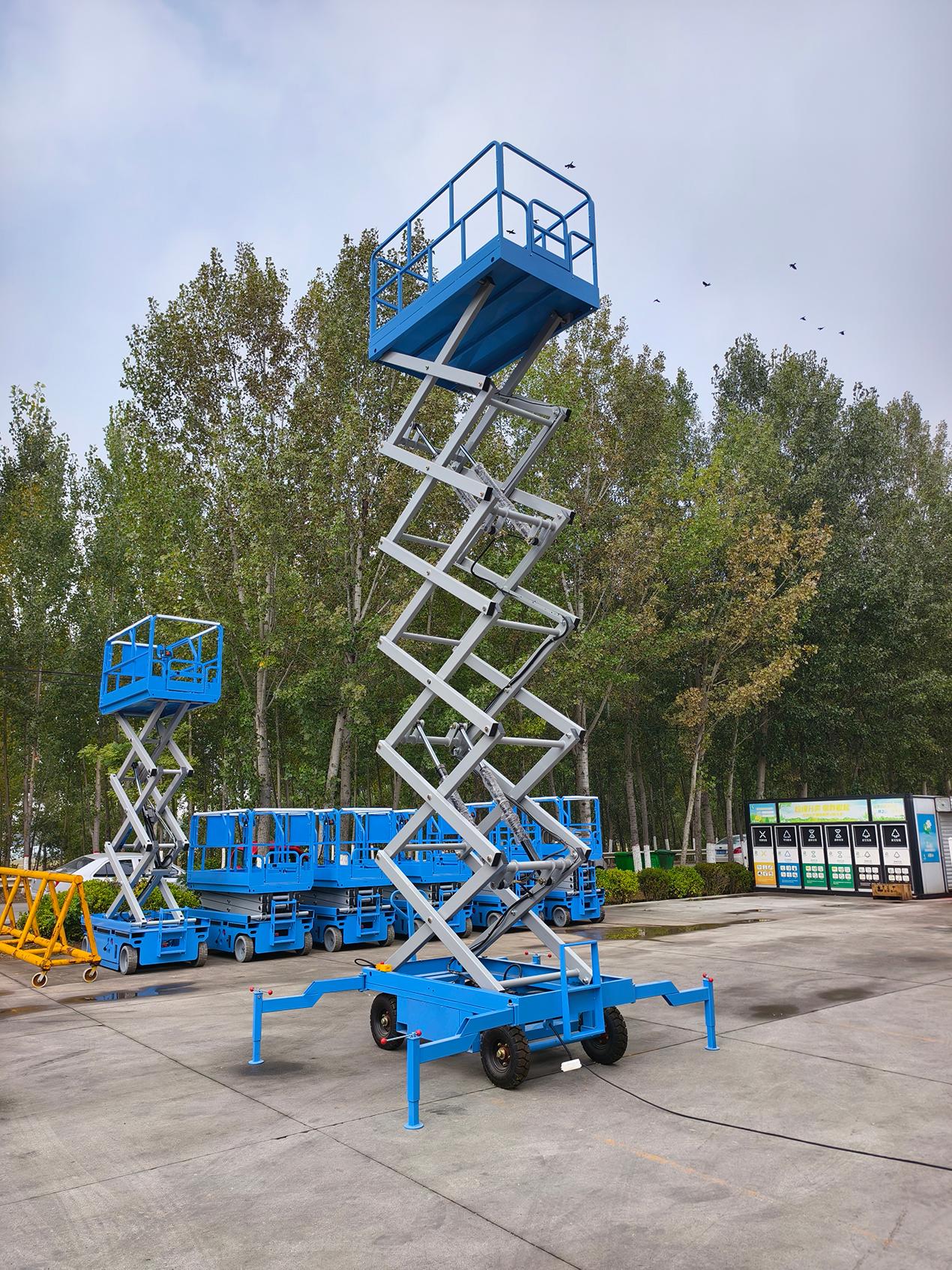
On a manual hydraulic scissor lift platform for building maintenance, the cylinder that drives the stack sits inside the mechanism, and the rod is protected by a flexible bellows on the units shown here, keeping grit, overspray and dust off the sealing surface. The pivot pins are the parts to watch during service: they carry the whole load and should turn freely with no play.

Deck size is set when the unit is built — a longer or wider platform for a bulky load, or a two-person working deck — and the scissor stack beneath it is sized to the height and the load you specify.

Adjustable Height Range

  • Raise and stop where the job needs it: the platform is not tied to fixed levels, so the deck can be brought up to a machine bed, a mezzanine rail or a facade line and left there while the work is done.
  • Low positions: loading and unloading, presenting a component at bench height, and feeding a machine without lifting the weight yourself.
  • Mid positions: mezzanine access, ducting and ceiling services, racking maintenance and lighting work in a tall bay.
  • High positions: window, cladding, signage and downpipe work where the platform has to reach the upper part of the building.
  • Choose from the highest point you must reach: measure the fixture being worked on, add the space you and your tools need above it, and quote us that total.
  • Watch the headroom: leave clearance above the top working position for the operator and the guardrails, and look out for cables, pipework and branches above the platform.
  • Height is fixed at build: the working height is agreed when the unit is ordered, so an unusual building or a very specific level is worth raising at enquiry rather than working around later.
  • Deck size and height move together: a longer platform at the same working height changes how the unit approaches the work and how much room it needs at the top of the stroke.

Durable Construction & Finish

The frame is fabricated from steel section, welded into a base chassis and a platform deck, and the scissor arms are steel as well. Fabricated parts are painted after welding, which gives the units their blue finish and protects the steel through outdoor storage and the damp, dusty conditions of a working site.

Paint is not what decides how long a lift lasts, though. The steel gauge, the quality of the welds around the arm pivots and the outrigger mounts, and the way the cylinder is protected do far more for working life than any finish coat — those are the details worth asking about when two quotes look identical on paper.

Every build follows the drawings agreed with the mobile scissor lift manufacturer before production starts, so a repeat order arrives with the same frame, the same deck size and the same working height as the units already in service. For a hire fleet or a dealer line, that consistency is worth as much as the machine itself.
Safety Systems

  • Guardrails around the deck: on this manual mobile scissor lift the working platform is enclosed on its sides, so the operator is contained by the machine instead of working free on a ladder.
  • Emergency stop: a stop control on the pendant cuts the drive immediately if something goes wrong at the platform.
  • Overload protection: the lift is protected so an over-heavy pallet or a misjudged load cannot simply be raised.
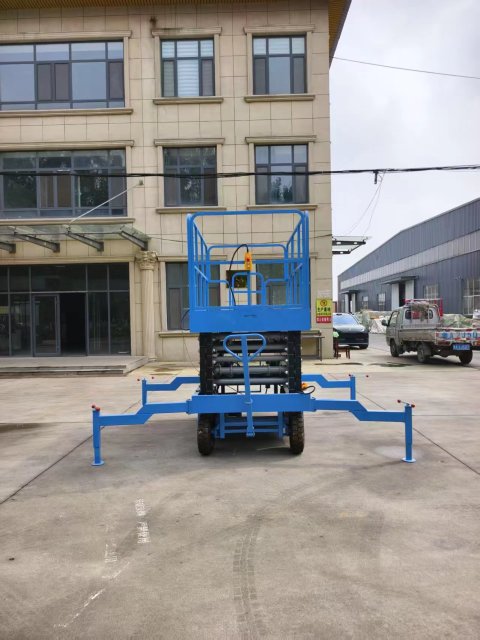
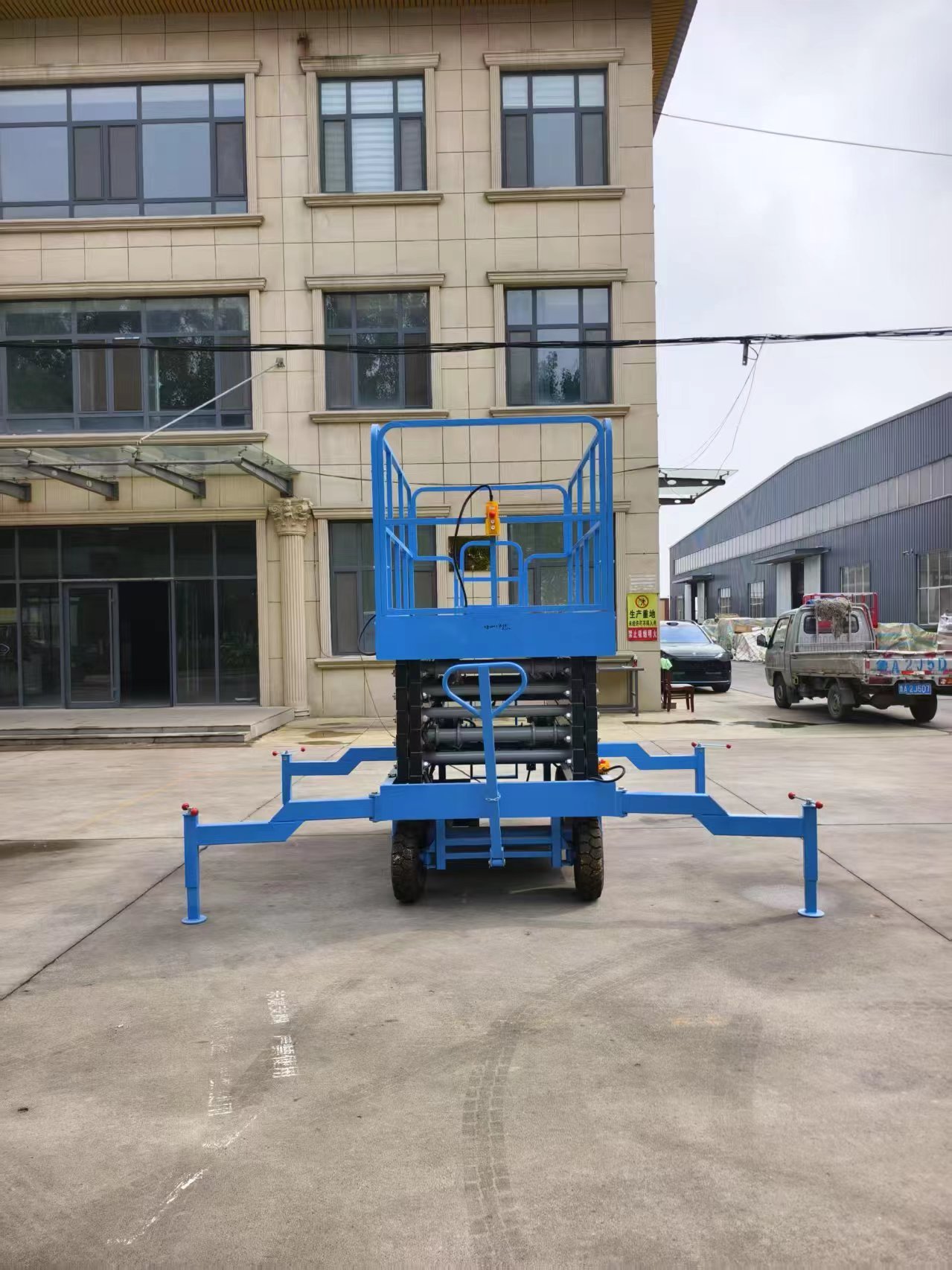
  • Outrigger support: the legs are set out on the ground before the platform goes up, widening the base well beyond the chassis footprint.
  • Control pendant: raising and lowering controls sit on a lead, so the operator can stand clear of the frame while the platform moves.
  • Working discipline on site: keep the ground under the platform clear while it is raised, never travel with the arms extended, and set the outriggers on firm ground rather than on soft fill, gravel or a slope.

Mobility, Wheels & Outrigger Setup

  1. Bring the platform down to its rest position before the unit is moved; the lift travels with the scissor arms folded.
  2. Choose the working position on firm, level ground, and check the surface the wheels and outrigger feet will stand on.
  3. Swing the outrigger legs out and set them on the ground so the base is wider than the chassis on every side.
  4. Move the unit on its wheels — on a flat concrete or asphalt yard it can be pushed by hand, and the towing hitch lets it be pulled behind a vehicle between sites.
  5. Re-check that the platform is level and the outrigger feet are still bearing before anyone steps up.
  6. Plug the lift into the site supply, raise the platform to the working height, and keep the ground underneath clear for as long as it is up.
Blue scissor lift raised to full height with outriggers deployed outdoors.

Applications Across Sites

  • Warehousing and logistics: reaching stock at the top of racking, loading and unloading mezzanines, and maintaining lighting, sprinkler heads and roller doors without a scaffold tower.
  • Manufacturing and assembly lines: presenting heavy assemblies at a comfortable working height, feeding machines, and reaching overhead services in a tall production bay.
  • Automotive repair and maintenance: lifting engines, gearboxes, sub-assemblies and body panels to bench height, and reaching the lighting and ducting in a tall workshop bay.
  • Construction sites, indoor and outdoor: installing mechanical and electrical services, fixing ceilings, and repairing cladding, facades and signage on the building itself.
  • Building maintenance: a wheeled hydraulic lift for maintenance rounds — windows, gutters, downpipes, air-conditioning units, lamps and signage.
  • Commercial premises and hospitality: atrium lighting, high shelving, seasonal displays and ceiling work in shops, hotels and showrooms that stay open while the job is done.
  • Rental fleets and dealer stock: a repeat line for hire companies and distributors, supplied to the same mobile scissor lift manufacturer build each time so every unit in the fleet takes the same deck, controls and working height.

Technical Specifications

SpecificationDetail
Load capacity500 kg
Lifting height0.5 m to 16 m (customisable; mobile range 4 m to 16 m)
Drive typeElectric hydraulic
Power supply220 V/380 V, 50/60 Hz
Platform sizeCustomisable to the load and the task
MobilityWheels fitted to selected models; towing hitch for site-to-site transport
FrameWelded steel, painted finish
ControlPendant control for raising and lowering
Working positionsLow loading positions through to full building working height

Ordering & Delivery

Four details let us price and build the right unit: the highest point the platform has to reach, what will stand on the deck and how the weight is spread, the platform size the job needs, and the power supply available where the lift will work. If the machine is going to be moved between sites, say so as well — that decides whether the wheeled and towing version is the right one.

Stocked units normally dispatch within about 7 days; confirm current availability at the time of your enquiry, and for a build-to-order height or deck size check the current schedule with your sales contact. Logistics and shipping come with global export expertise, so dispatch, export paperwork and loading are arranged end to end.

Machines are packed for sea freight in the normal way for this class of equipment. Confirm the packing, container loading and any marking you need with your sales contact before the unit leaves.

Because we buy direct from the mobile scissor lift manufacturer rather than through layers of traders, spare parts and repeat builds come from the same drawings — useful when a fleet or a dealership needs the next unit to match the last one.

Send your working height, load details and site supply to your sales contact, and we come back with the build, the schedule and the shipping plan.

Wear Parts & Storage

  • Pivot pins and bushes: the scissor arm pins carry the full load on every cycle, so they are the first place to look for wear. Keep them greased, and replace a pin or bush as soon as you can feel play in it — a worn bush lets the deck shift as the platform comes down, and that is usually felt at the top of the stroke before it is seen.
  • Cylinder rod, seals and bellows: the rod is covered by a flexible bellows on the units shown here, and that cover is doing real work. Keep it intact, because a split bellows lets grit onto the sealing surface, and a weeping rod seal is the most common hydraulic fault on a manual mobile scissor lift working outdoors.
  • Hydraulic oil, hoses and fittings: check the oil level with the platform folded down, and look for weeping at the hose ends, the pump and the fittings — a damp ring around a fitting usually shows long before a hose fails. Ask us for the service interval that suits your duty cycle, and keep one spare hose length, a seal set and fittings on the shelf so a weeping joint does not put the lift out of service for a week.
  • Wheels and outrigger feet: the castors carry the unit while it is pushed and the outrigger feet carry it once the platform is up. Check the castors for flat spots and binding at every move, and check the outrigger legs for bent or worn threads — a foot that no longer sits flat will not hold the base steady on a hard surface.
  • Deck, guardrails and controls: confirm the guardrail and deck fixings are tight, that the deck surface is not bent or holed, and that the pendant lead is not cut, crushed or stretched. Test the raising and lowering controls and the emergency stop before the first lift of the day.
  • Between-jobs routine: the walk-round takes a few minutes — oil level, hoses, outrigger feet, castors, rail fixings and pendant cable. Anything that feels loose, sounds different under load or weeps should be checked before the next lift rather than noted and worked around.
  • Storage between jobs and between seasons: bring the platform all the way down, retract the outriggers, and leave the unit on firm, level ground rather than on soft fill or a slope. Covering the unit is preferable; if the lift stands outside, keep the scissor stack clear of grit and cover the deck and the pendant. Do not pressure-wash straight at the cylinder seals or the control box, and never weld or drill into the scissor arms or the base frame to add a bracket — those members are sized for the load they carry.
  • Spares to keep on the shelf: bushes, seals, a hose length, fittings and castor sets are the items that put a lift out of service when they are missing. Tell us how many units you run and we will put the wear-part list together for that fleet, so a lift that sits idle between contracts goes back to work the day it is needed. Spares and repeat units come from the same build drawings as the machine you already run, which keeps a fleet or a dealer line consistent.

Supply Chain & Delivery Assurance

Lovin (Jining Lovin Construction Machinery Co., Ltd.) has supplied machinery buyers since 2017 as a distributor, sourcing through authorised channels and a verified supplier network. One order can cover the machinery mix your customers ask for and leave as a single consolidated shipment. Stocked items dispatch within about 7 days; lead times are confirmed against availability at enquiry, and busy-season schedules are agreed with suppliers in advance. OEM and customised builds follow the same route, and spare and wear parts stay supported after delivery. We export to Europe, South America, the Middle East, Australia, New Zealand and Russia.

FAQ

Q1. How do I work out the right lifting height for my site?

Start from the highest point you actually have to reach — the top of the fixture, the highest window, the ceiling service or the top of the racking — and add the working space you and your tools need above it. That total is the working height to quote. It is also worth checking what sits above the platform at that height: cables, ductwork and branches all limit where the lift can be set up.

Q2. Can the platform be built to suit my load?

Yes. Platform size is agreed when the unit is ordered, so a long deck for a bulky component and a wider deck for two people working together are both possible. When you specify it, tell us the footprint of the load, how the weight is spread across the deck and whether anything has to be wheeled straight on and off. The scissor stack and the working height are matched to the same figures.

Q3. What happens to the platform if the power is cut while it is raised?

The load sits on the hydraulic circuit rather than on a mechanical latch, so the deck stays where you left it even if the supply is interrupted mid-shift. The safe routine is still to bring the platform down to its rest position before the site power is isolated, and to follow the operating procedure for your unit whenever the electrical supply is being worked on.

Q4. What maintenance does the unit need between jobs?

Most of the routine work is a walk-round check rather than a service: look at the hydraulic oil level, look for weeping around the hoses and the cylinder, check that the outrigger feet still sit flat and that the wheels roll without binding. Keep the deck and the scissor stack clean, and store the lift with the platform lowered on firm ground rather than on soft fill. Anything that feels loose or sounds different under load is worth stopping and checking before the next job.

Q5. How is this different from a self-propelled scissor lift?

This manual mobile scissor lift is moved by hand or towed and works from the site supply once it is in position, which keeps the cost and the maintenance low and suits jobs where the lift stays in one place for a shift. A self-propelled scissor lift drives itself around the site, which pays for itself on large sites where the operator repositions every few minutes; in a single bay or a service yard it is usually more machine than the job needs.
CONTACT US

If you have any queries, get in touch today! Don't hesitate. We try to take the extra step for our customer satisfaction.
Name *
Email *
Message *
Verification Code *
Click to verify
Message Us