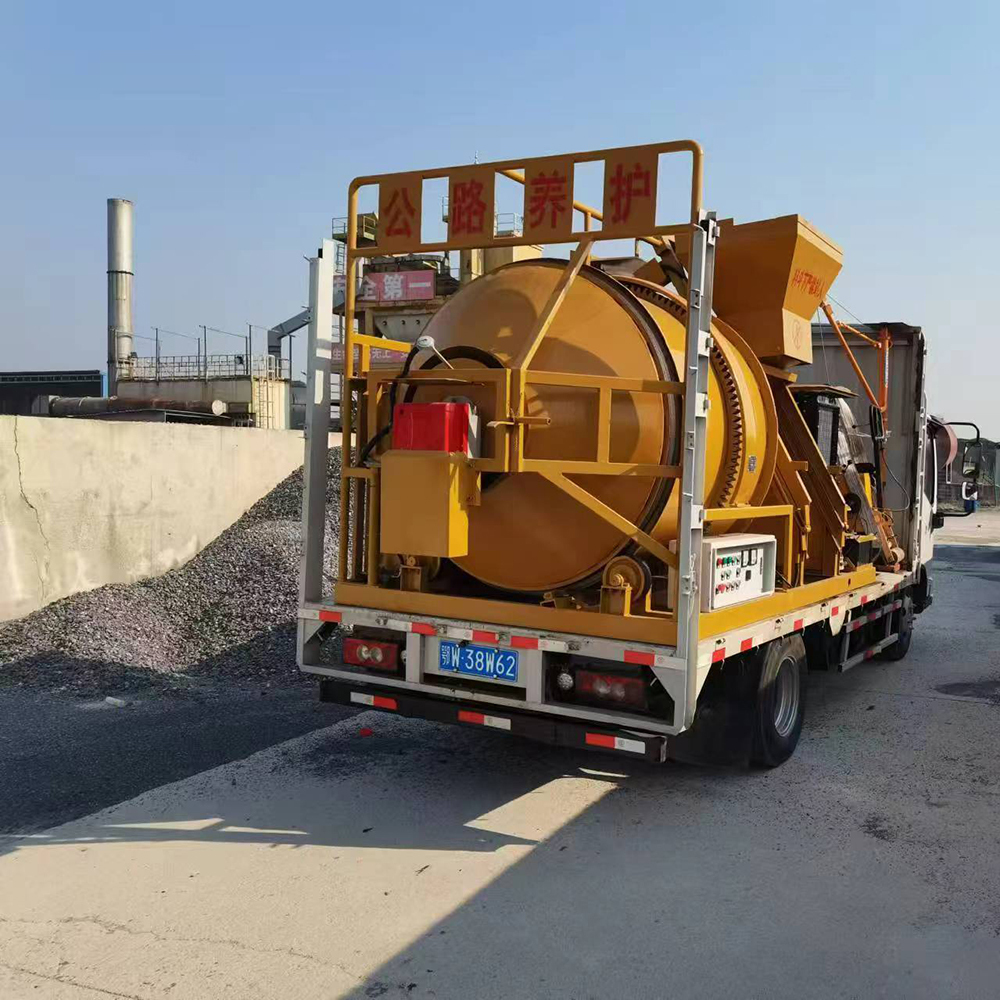
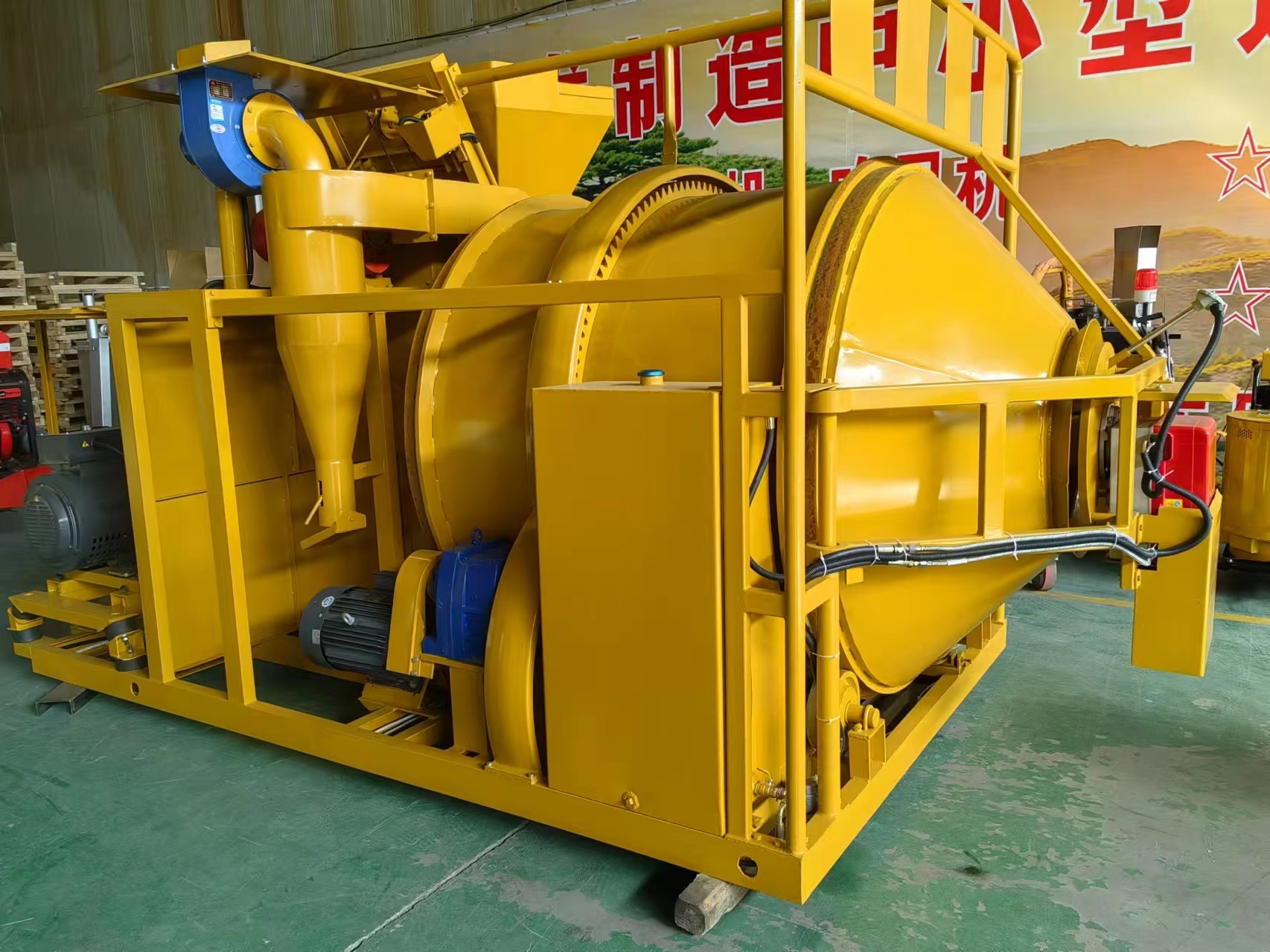
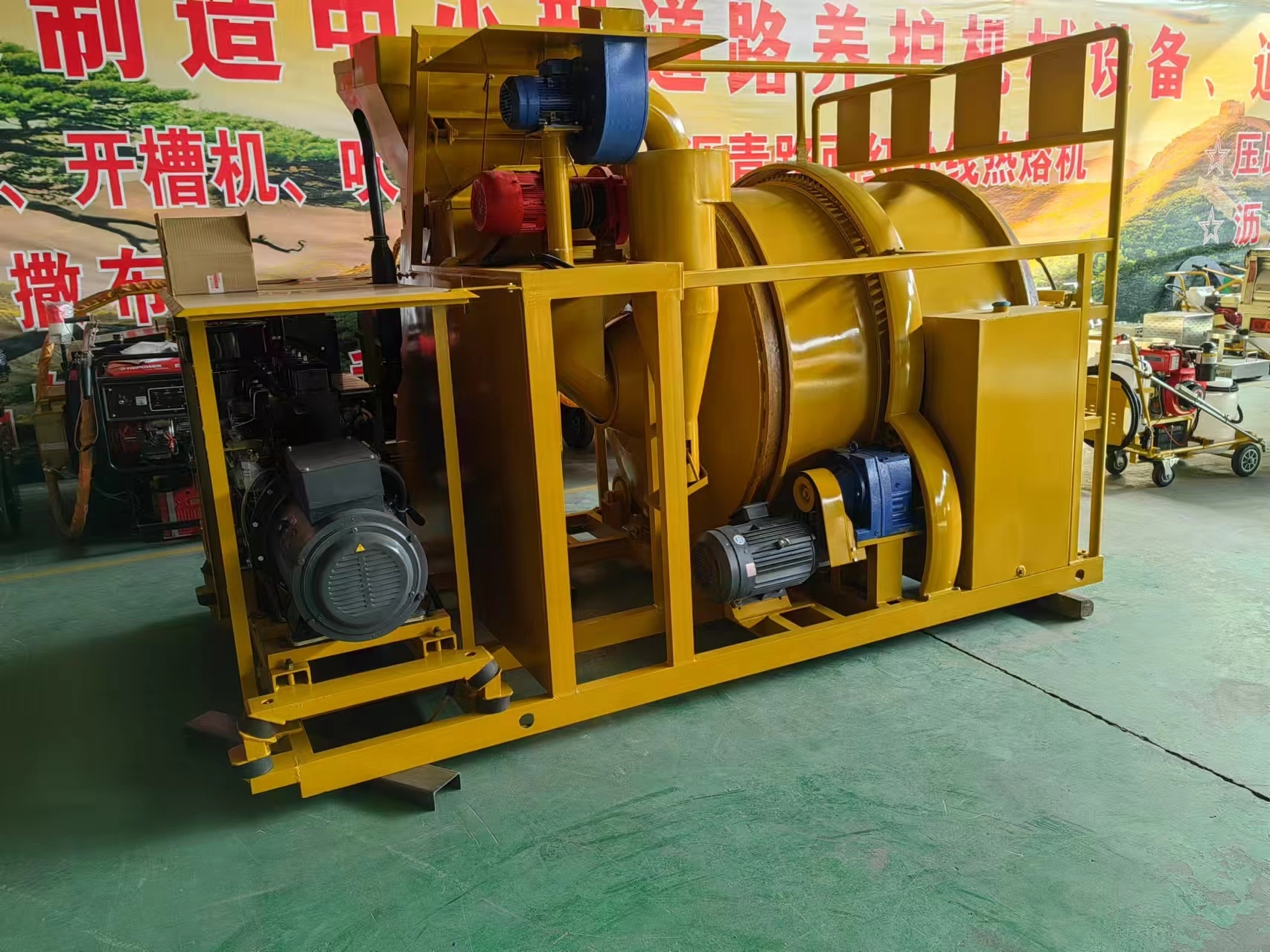
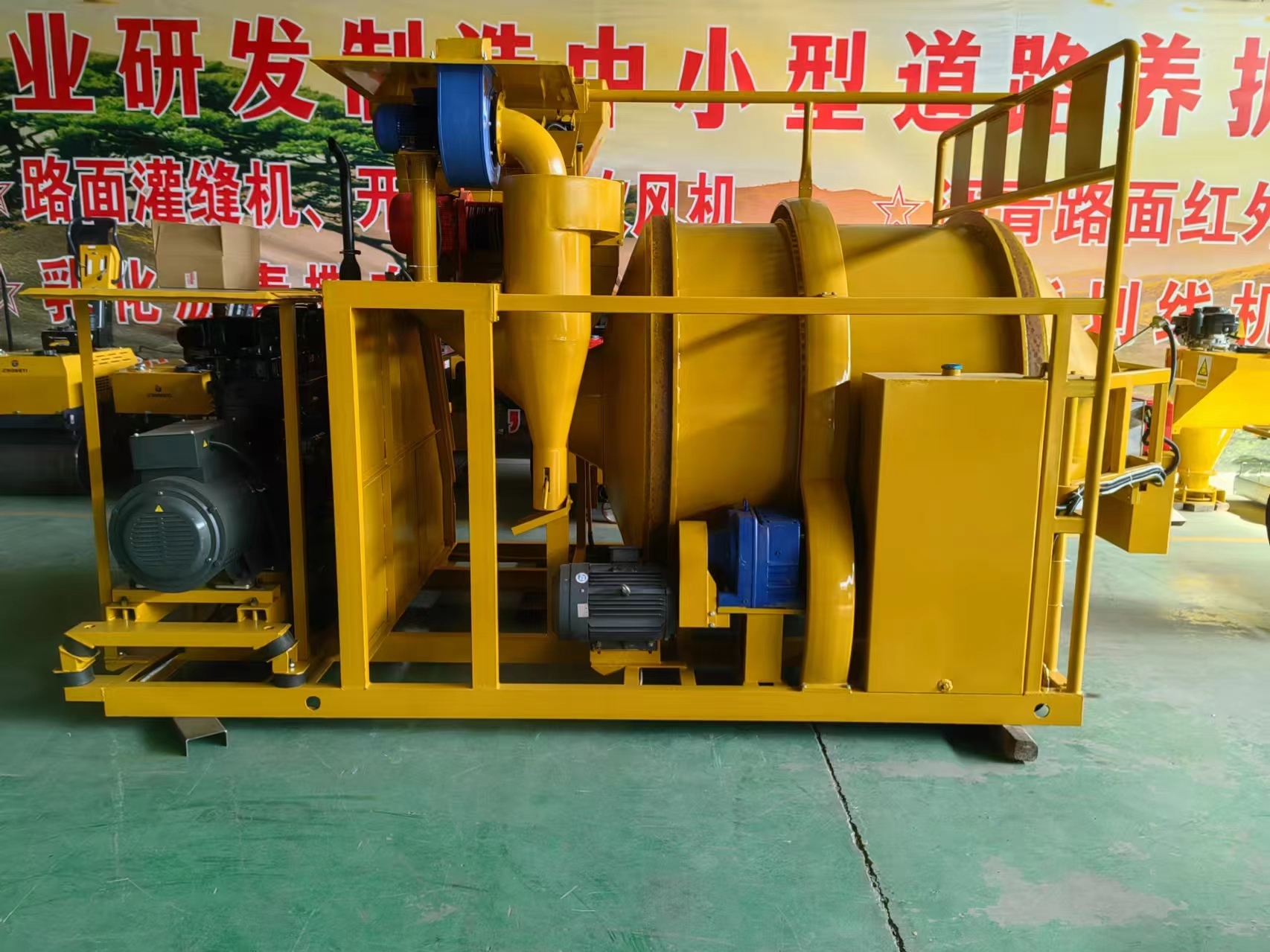
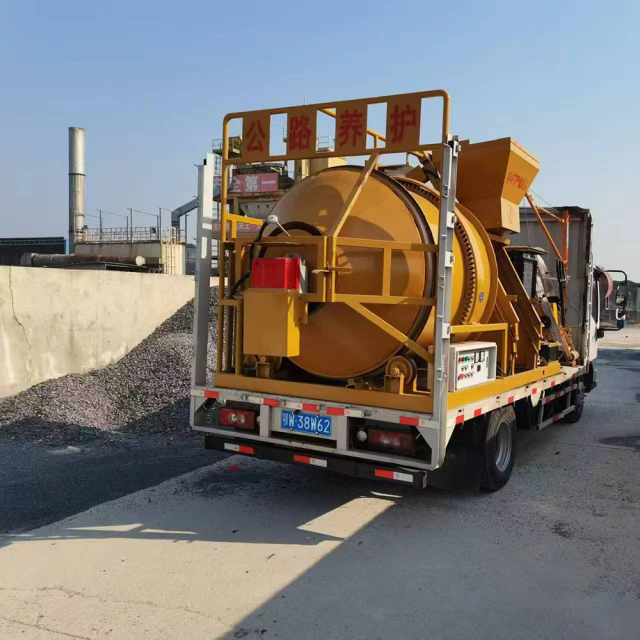
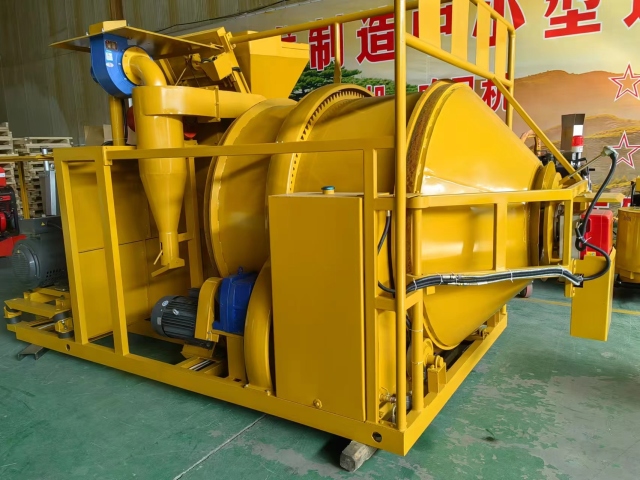
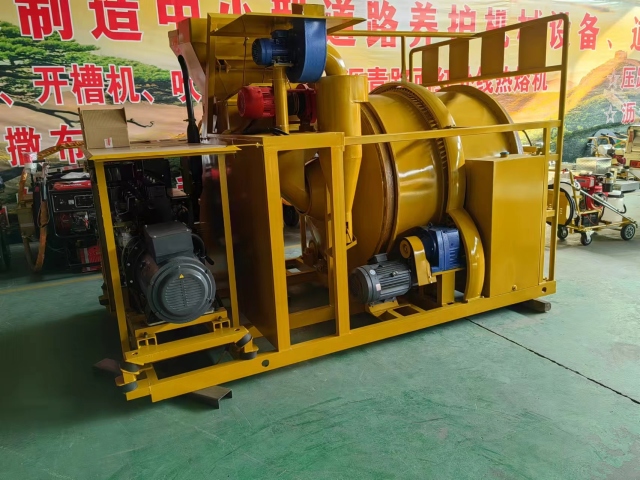
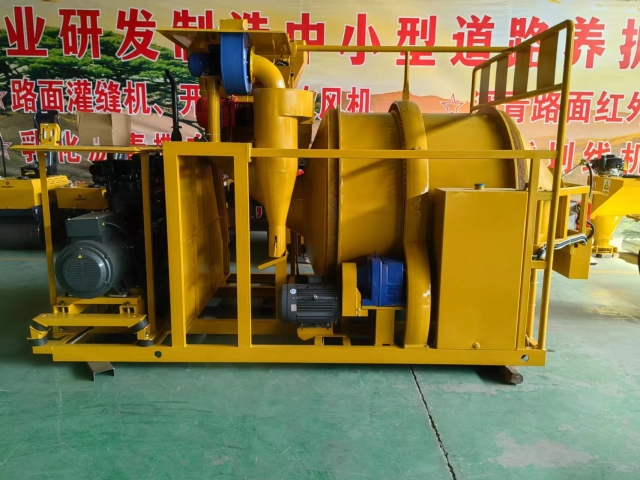
Product Overview
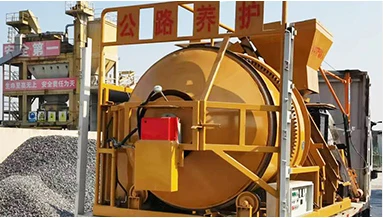
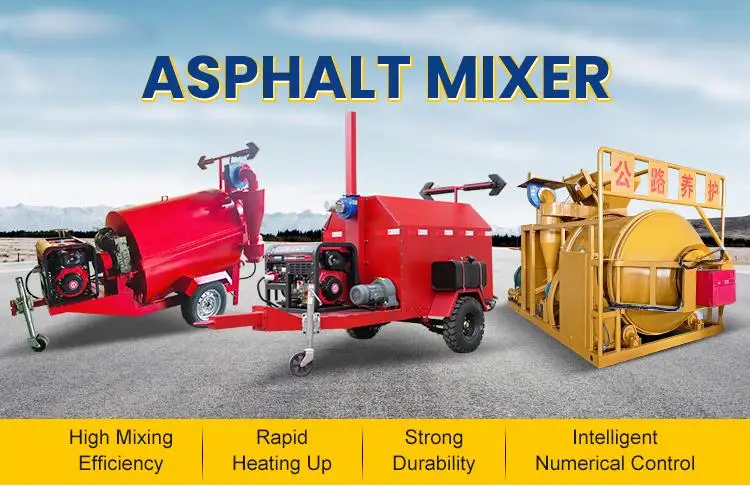
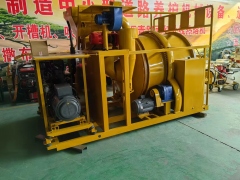
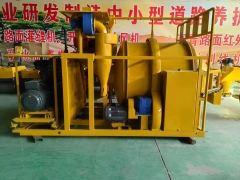
An asphalt material mixer for crews who need hot mix where the road is, not where the plant is. The machine heats and stirs reclaimed asphalt — milled or planed-off surface, patching lifted out during repairs, material taken up during a trench reinstatement — until it can be laid again, and it will also take a proportion of new asphalt mix blended into the same charge when a job calls for it.
That makes it a hot asphalt mixing machine for pothole repair rounds as well as a small batching unit for everything else a maintenance gang picks up in a week: a failed section of carriageway, a reinstated trench, a car park apron, a bridge approach. Material goes in cold and comes out workable, so the crew lays it straight from the drum instead of driving it in from a batching plant.
Nothing about the machine ties it to a region with a mixing station nearby. It does not wait for a plant to open, run a batch and send a load out, and it does not lose the load's temperature on the way to the job. A small contractor can keep it at the yard and move it out with the rest of the gang's kit; a larger outfit can leave it at the end of a long-running job and run batches as the work moves down the road.
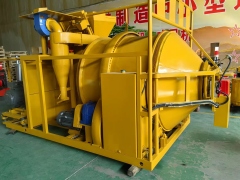
Day to day the drum is charged through the feeding hopper, heated and discharged while the mix is still hot enough to place and compact. Because the drum is insulated it holds its working temperature between cycles, so the second batch of the morning comes up faster than the first and the crew is not waiting on the machine.
Crews that already run a roller, a plate compactor and a tipper use this machine to close the loop on their own patching work. Dealers and rental yards add it as a self-contained recycling and batching unit that needs no second prime mover and no plant connection.
If your mix or your site is unusual — very wet stockpiles, restricted access, a long daily route — tell us and we will work out which machine in the range covers it.
Key Features
- Insulated mixing drum – The drum carries an insulation layer, so heat stays in the batch instead of escaping into the air around it. Between cycles the drum stays warm, which means less fuel is burnt bringing the next charge up to temperature.
- Large heating area – The drum's heating surface is generously sized for the charge it carries, so material reaches working temperature quickly and the machine spends more of the shift mixing rather than waiting to heat.
- Deep, even mixing – The internal blade layout is worked out to stir material right through the drum rather than turning the top layer over. Reclaimed lumps and any new material in the charge come out thoroughly blended, which is what keeps soft and hard spots out of the same repair.
- Digital control panel – The operator sets the working temperature on the panel and runs the cycle from it, watching status while the batch heats instead of standing over the drum guessing when the mix is ready.
- Proportional new mix – Alongside recycled material, the machine takes a measured proportion of new asphalt mix in the same charge, so a job that needs a stronger or finer blend can still be run on site.
- Built for a working life – Production follows a strict quality management system and advanced process standards, and every unit is controlled and tested through each stage before it ships. That is what keeps a mixer working season after season rather than for one contract.
Specifications
| Model | CL-350 / CL-400 / CL-700 / CL-1000 |
|---|
| Cylinder capacity | 350 kg (CL-350) · 400 kg (CL-400) |
| Mixing quantity per batch | 0.7 t per batch / 0.4 m³ (CL-700) · 1.0 t per batch / 0.6 m³ (CL-1000) |
| Feeding hopper capacity | 0.2 m³ (350 kg) |
| Heating temperature | 140–160 °C (CL-350 / CL-400) · 120–140 °C (CL-700 / CL-1000) |
| Batch cycle time | 10–15 min |
| Generator power | 7.0 kW |
| Frequency | 50 Hz / 60 Hz |
| Start-up | Electric start |
| Cooling | Forced cold air |
| Fuel tank capacity | 45 L |
| Oil capacity | 1.6 L (CL-350 / CL-400) |
Model Range & Batch Output
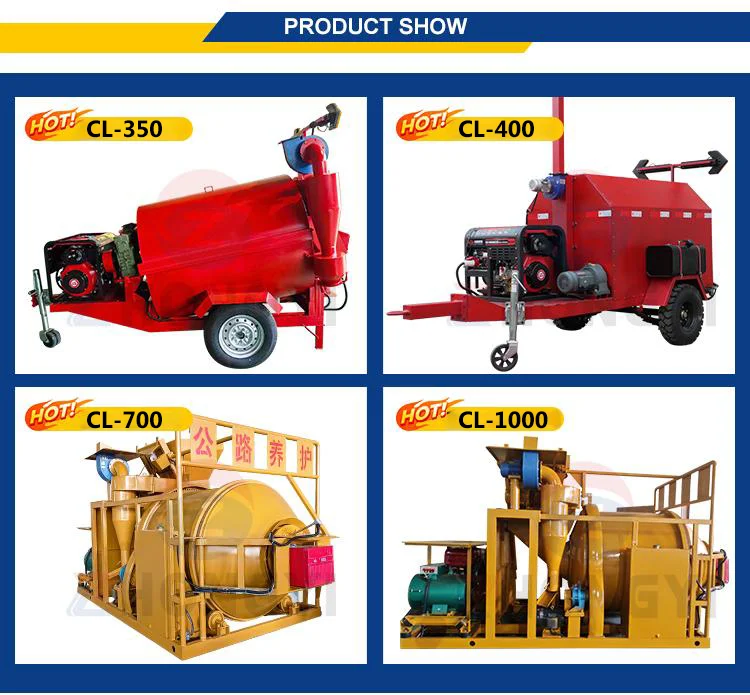
- Two size groups – The range splits into a compact pair built around a single drum charge, and a larger pair that takes a substantially bigger charge per batch and is aimed at higher daily output.
- The compact machines – Suited to a patching gang that works from a pickup or a small tipper, closes a handful of repairs in a shift and needs the material fresh rather than in bulk. They travel with the gang's other equipment.
- The larger machines – For crews laying surface over longer sections, running reinstatements all day, or a yard that batches material for several gangs at once. They need a lorry or a trailer and a lift on arrival.
- Match the drum to the crew – Work out how much material your gang places on an ordinary day, then choose the machine that keeps that pace without the crew standing around between batches. Buying bigger than the work needs leaves the machine heating more material than the job uses.
- Cyclical production – Output builds batch by batch: the machine heats a charge, discharges it, recharges and starts again while the crew places what it has. On patching work that rhythm suits the job better than one large continuous batch.
- Feeding hopper on every model – Material is charged through the same feeding hopper across the range, so a shovel team, a small loader or an excavator bucket all work the same way.
- Transport and siting – Check the access at your yard and on your regular jobs before you order. A big mixer stays big when it reaches site, and a narrow gate or soft ground decides where it can work.
- Model codes – The code on the machine tells us which drum and which batch output you are working with. If you are matching a mixer you already run, send the code and we will confirm the closest match.
Applications
Pothole rounds are where a hot asphalt mixing machine for pothole repair earns its place fastest. A municipal or contractor patching gang working down a list parks the unit at the first repair, runs a batch while the crew cuts out the hole, and lays hot material instead of cold patch. The same machine stays hot through the round, so nobody is racing a hot box to the last repair of the afternoon.
Longer jobs are just as comfortable. Highway construction and maintenance crews use it for shoulder repairs, failed joints and broken sections that are not worth a plant order. Urban road construction covers residential streets, junctions and bus routes, where a full plant load is more material than the job needs and the works have to be closed and reopened the same day. Bridge and pavement engineering work — approaches, expansion-joint surrounds, deck repairs and pavement reinstatement — suits a machine that keeps material workable while it is placed and compacted, especially where a truck cannot get close.
Utility trench reinstatement is another regular use: water, gas and telecom contractors topping out a trench with material taken from the same road. Smaller surfacing contractors and grounds teams use it on car park aprons, loading areas and access roads. Contract crews working a council or highways framework use it to hold their own schedule and cut the number of outside material deliveries they depend on. On a quiet day it handles one deep repair; on a busy one it runs repair after repair from the same drum.
Batch Cycle & Operation
- Position the asphalt recycler machine on firm, level ground within reach of the repair, with the discharge side clear and the unit set outside the traffic lane on a road job.
- Charge the drum through the feeding hopper. Load reclaimed material in manageable pieces, and if the mix design calls for new asphalt, add that proportion with the reclaimed charge.
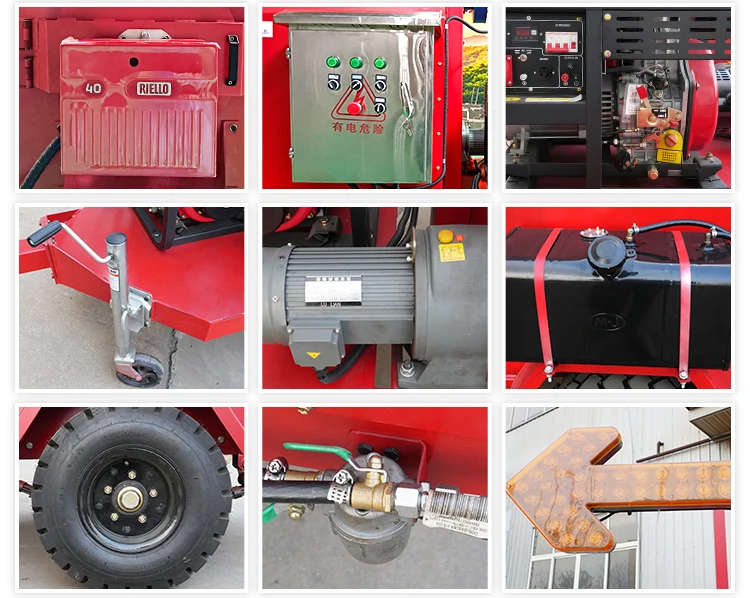
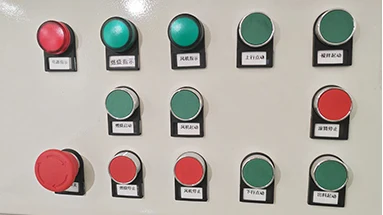
- Set the working temperature on the control panel. The panel carries separate start and stop buttons for the burner, the fan, the feeding and the discharge, plus an emergency stop, so the operator runs the whole cycle from one position.
- Start the burner and let the drum come up to temperature, watching the run status on the panel while the batch heats.
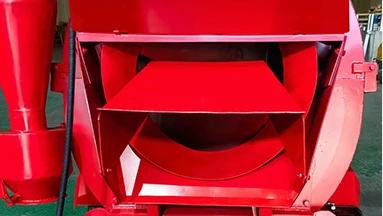
- Discharge the finished batch into barrows, a small dumper or the paver, and let the crew place and compact it while it is still hot.
- Recharge and start the next batch straight away. Because the drum is insulated it holds its heat between cycles, so the second batch comes up faster than the first.
- Shut down in sequence — burner first, then the fan — and let the drum cool before the machine is moved.
- End the shift by clearing the discharge chute and the drum mouth, and check the burner and the oil level as part of the daily routine.
Weights & Transport Dimensions
| Machine weight, CL-350 | 1550 kg |
| Machine weight, CL-400 | 1200 kg |
| Machine weight, CL-700 | 2.2 t |
| Machine weight, CL-1000 | 3.3 t |
| Overall size, CL-700 | 3.4 × 1.8 × 2.2 m (length × width × height) |
| Overall size, CL-1000 | 4.0 × 1.9 × 3.0 m (length × width × height) |
| Overall size, CL-350 and CL-400 | Confirmed with you before haulage is booked |
| Batch weight, CL-700 | 0.7 t (0.4 m³) |
| Batch weight, CL-1000 | 1.0 t (0.6 m³) |
| Lifting and tie-down points | Confirmed with you before dispatch |
Ordering & Delivery
- Tell us the job: the mix you run, the material you want to recycle, and how much your crew places on a normal day. We will confirm which model in the range covers it.
- Confirm the site: access, ground conditions, and how you plan to unload and move the machine. A mixer is heavier than it looks, so this is worth settling before you order.
- Stock and dispatch. Machines held in stock are dispatched within about 7 days. For a unit that has to be built or configured, we confirm the schedule with you before you commit.
- Shipping and export handling: logistics & shipping – global export expertise for transportation to your destination port.
- Packing and loading. Tell us whether the machine ships as a full load or alongside other equipment, and we will confirm the packing and loading arrangement for that shipment.
- Documents and labelling. Confirm the paperwork your market needs and the language you want on the control labels when you place the order.
- Spare parts. As an asphalt pavement repair equipment supplier, we supply wear and spare parts for this range after delivery. Tell us which items you want held and confirm availability with your order.
- Keep the model code you have ordered on file. Quoting it later makes follow-up part orders and service questions quick to answer.
Fuel & Site Consumables
- Diesel is the only fuel the machine needs. The burner and the generator set both draw from the unit's own 45 L tank, so there is one thing to plan for and no separate power supply to arrange at the roadside.
- Plan fuel by the batch rather than by the hour. Consumption moves with the number of batches in your round, how wet the reclaimed material is and how long the drum is left idling between charges. Send us the batch count for a normal day and we will confirm what to allow for.
- Carry a top-up of the oil specified for the unit. The compact CL-350 and CL-400 take 1.6 L, and keeping that oil with the gang means a small drop in level is dealt with between batches instead of stopping the round.
- Keep the cooling path clear. Cooling is by forced cold air, so the asphalt recycler machine has to stand with its intake and its hot air outlet unobstructed — not tucked against a van, a container or a heap of material. On dusty yard work, blow the cooling path through as part of the daily routine.
- Have a shift's worth of material broken down and within reach. Reclaimed surface comes out of the drum as fast as it goes in, so the charging side needs enough material sized to move freely, placed where a shovel team or a small bucket can reach the hopper without dragging it across the site.
- Keep the start battery in condition. Start-up is electric, and a machine that stands for weeks between contracts is more likely to be let down by a flat battery than by anything else. Charge or check it before a season starts and before a long run of work.
- Arrange the handling and placing kit. Barrows or a small dumper for the discharge, shovels for the charging team, and the compaction equipment you already run. None of it travels with the mixer, and a batch that waits to be placed loses the advantage of being hot.
Supply Chain & Delivery Assurance
Lovin (Jining Lovin Construction Machinery Co., Ltd.) has supplied machinery buyers since 2017 as a distributor, sourcing through authorised channels and a verified supplier network. One order can cover the machinery mix your customers ask for and leave as a single consolidated shipment. Stocked items dispatch within about 7 days; lead times are confirmed against availability at enquiry, and busy-season schedules are agreed with suppliers in advance. OEM and customised builds follow the same route, and spare and wear parts stay supported after delivery. We export to Europe, South America, the Middle East, Australia, New Zealand and Russia.
FAQ
Q1. Can this asphalt recycler machine work on a site with no plant and no mains power?
Yes. The machine carries its own generator set, so on site there is nothing to plug into — set it down on level ground and start it. That is what makes it usable at the far end of a route, on a bridge deck, in a yard with no supply, or on a job where waiting for a plant load would cost the crew half a day.
Q2. What reclaimed material can go into this hot asphalt mixing machine for pothole repair?
Milled and planed material, chunks lifted out during patching, and broken-up surface taken back to the drum all work. Rake out soil, rubbish and oversized lumps before charging, and keep the pieces small enough to move freely inside the drum. If your stockpile is very wet, heavily contaminated or from an unfamiliar source, describe it to us and we will tell you what to expect.
Q3. How is the drum charged — by hand or with a machine?
Either. Material goes in through the feeding hopper, which is set so two people with shovels can keep a batch coming, or a small loader or an excavator bucket can fill it on a yard or plant job. If a bucket is much wider than the hopper, tip it in gradually rather than dumping the whole load at once, and keep material from spilling down the side of the drum.
Q4. Which spare and wear parts should we keep on the shelf?
As an asphalt pavement repair equipment supplier, we support this range with spare and wear parts after delivery. Tell us which items you want held — most buyers keep the pieces that would otherwise stop a shift — and we will confirm what can ship with the machine and what is ordered separately. Confirm availability when you place the order rather than on the morning something fails.
Q5. Can the control panel be supplied with labels in our operators' language?
The panel is built around labelled start and stop buttons for the burner, the fan, the feeding and the discharge, with an emergency stop within reach, so an operator learns the sequence in a morning. Tell us at order stage which language your operators read and we will confirm what labelling is available for your build. The functions and the sequence stay the same whichever labelling you choose.
Q6. What fuel does the machine run on?
Diesel, the same as the rest of your site plant, drawn from the machine's own tank by the burner and the generator. Check the level at the start of the round rather than in the middle of a repair, and keep a spare can with the gang. If you work in an area with restrictions on running diesel equipment, tell us and we will confirm what you need to know before you order.