Product Overview
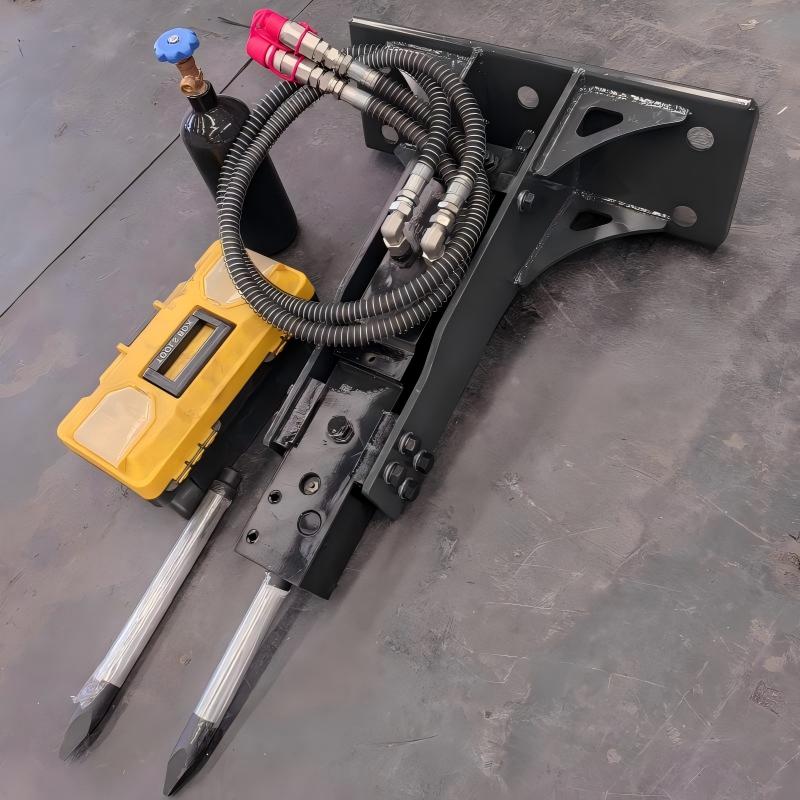
This hydraulic rock breaker hammer attachment for concrete demolition turns the hydraulic power your loader already produces into a concentrated impact. Pressure from the auxiliary circuit drives a piston inside the housing, and the energy it delivers through the chisel breaks hard material from the inside out instead of chipping at the surface.
It is built for the people who break things for a living — demolition and road contractors, municipal maintenance teams, and rental fleets whose customers already operate a skid steer. One carrier machine handles both ends of the job: the breaker comes off the mounting plate, a bucket goes on, and the debris is cleared.
What the tool replaces is the hire. Rather than booking a dedicated breaker or paying a subcontractor to bring in an excavator-mounted hammer, you put the attachment on the loader you own and work to your own schedule. The frame is compact and light for its class, which on a loader is felt directly: less weight on the arms, easier repositioning, and a tool that stays controllable at the chisel.
Product Advantages
- Reinforced housing: the body is stiffened where the piston load lands, so repeated impact cycles are absorbed by the structure instead of flexing the tool out of alignment.
- Modular sealing: seals are grouped into serviceable sections, which makes a leak easier to trace and repair and reduces the risk of oil escaping where a spill would be a problem.
- Serviceable wear parts: the chisel, bushings and seals are consumables, so a worn tip is a maintenance job rather than a reason to replace the attachment.
- Compact, light frame: the attachment adds less weight to the loader arms than a full-size breaker head, keeping the carrier balanced and the auxiliary circuit working efficiently.
- Controlled impact cadence: blows land at a steady rate with vibration and noise held down, which keeps the operator comfortable through a long shift and the tool practical where a diesel breaker would draw complaints.
- Standard mounting interface: the breaker mounts on the same plate your buckets use, so there is no adapter to source and no dedicated carrier to keep for it.
- Runs on the carrier's hydraulics: no compressor to tow, no second engine to fuel, and no extra service schedule added to the fleet.
Breaking Performance
Every blow lands at the chisel tip, where the energy is focused into a contact patch only a few centimeters across. Hold the chisel on the material and a crack opens and travels; lever the tool sideways and the energy goes into the chisel instead of the workpiece.
What decides how fast the job goes is mostly in the operator's hands. Thin slabs free quickly, while a deep foundation is broken in stages from the edge inward rather than through one hole in the middle. In reinforced concrete the matrix usually breaks first and leaves the bar exposed to be cut or pulled clear, and asphalt lifts and slabs out so it can be removed ahead of resurfacing. Rock follows its own seams and bedding planes, and a frost cap breaks open so a bucket can get underneath it.
A rounded or mushroomed chisel spreads the blow and slows everything down, so dressing or replacing the tip is the cheapest productivity gain on the tool. Short bursts, with the chisel repositioned between them, beat holding full pressure in one spot, and letting the attachment's own weight rest on the material is easier on the breaker than forcing it down.
The same behaviour carries into masonry, blockwork and render, where a bucket would simply ride across the surface.
Use Scenarios
- Urban demolition and infrastructure renewal: on an inner-city plot a hydraulic rock breaker hammer attachment for concrete demolition works inside the site footprint, breaking out old foundations, curbs and slabs where a larger carrier would never get set up.
- Road and pavement rehabilitation: breaking out failed asphalt and concrete layers ahead of resurfacing or an overlay, and working within short possession windows because the same carrier clears the spoil.
- Utility and service trenching: opening trenches through hard shoulders, old concrete surrounds and patched reinstatements around manholes and valves, where a bucket will not cut into the surface.
- Rock excavation and foundation preparation: splitting rock that a bucket simply rides over, trimming high points and preparing a level base for footings or slabs.
- Interior demolition and refurbishment: internal slabs, screeds and machine bases come out with a carrier small enough to work inside a building, where there is no room for a fuel-driven breaker rig.
- Yards, hardstands and loading areas: removing failed concrete aprons and broken slabs in industrial yards without closing the whole site down.
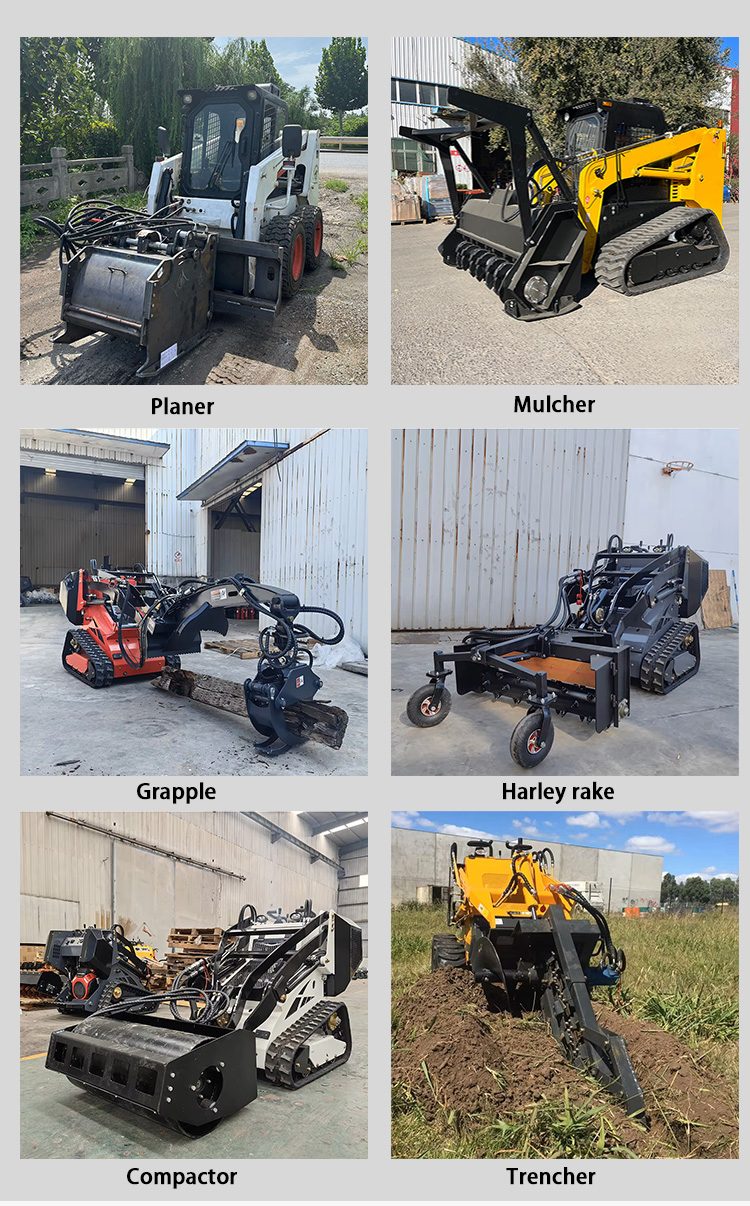
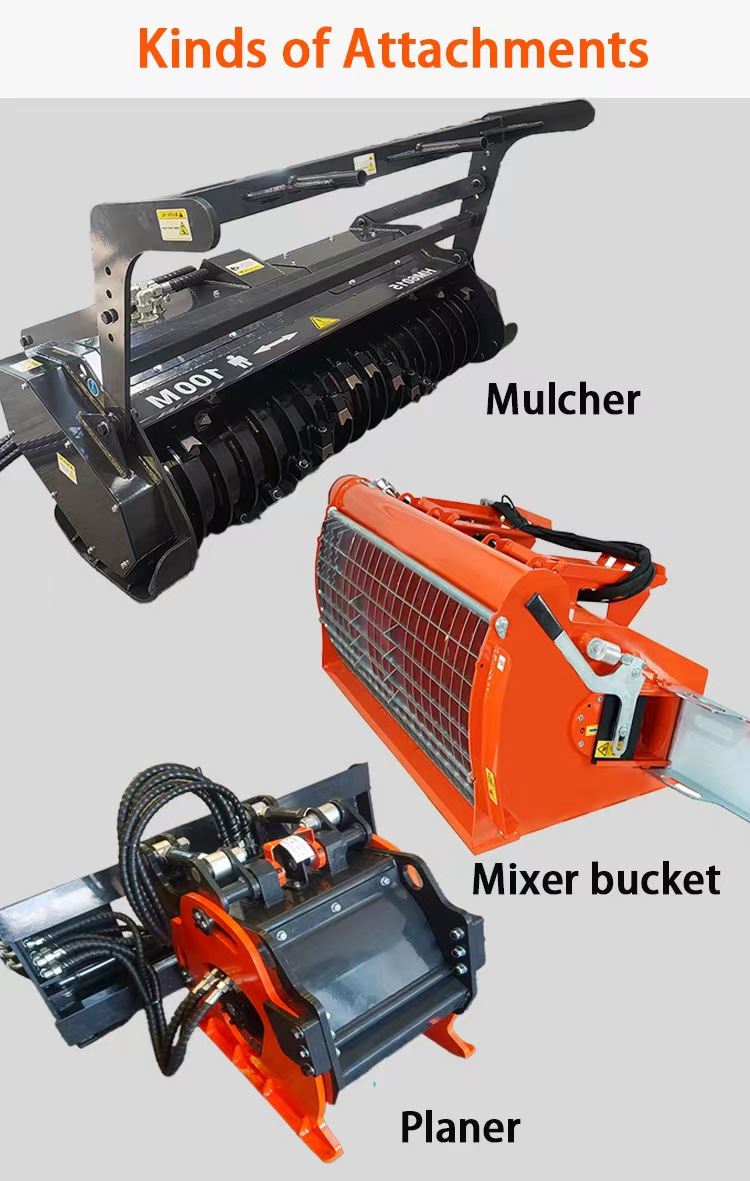
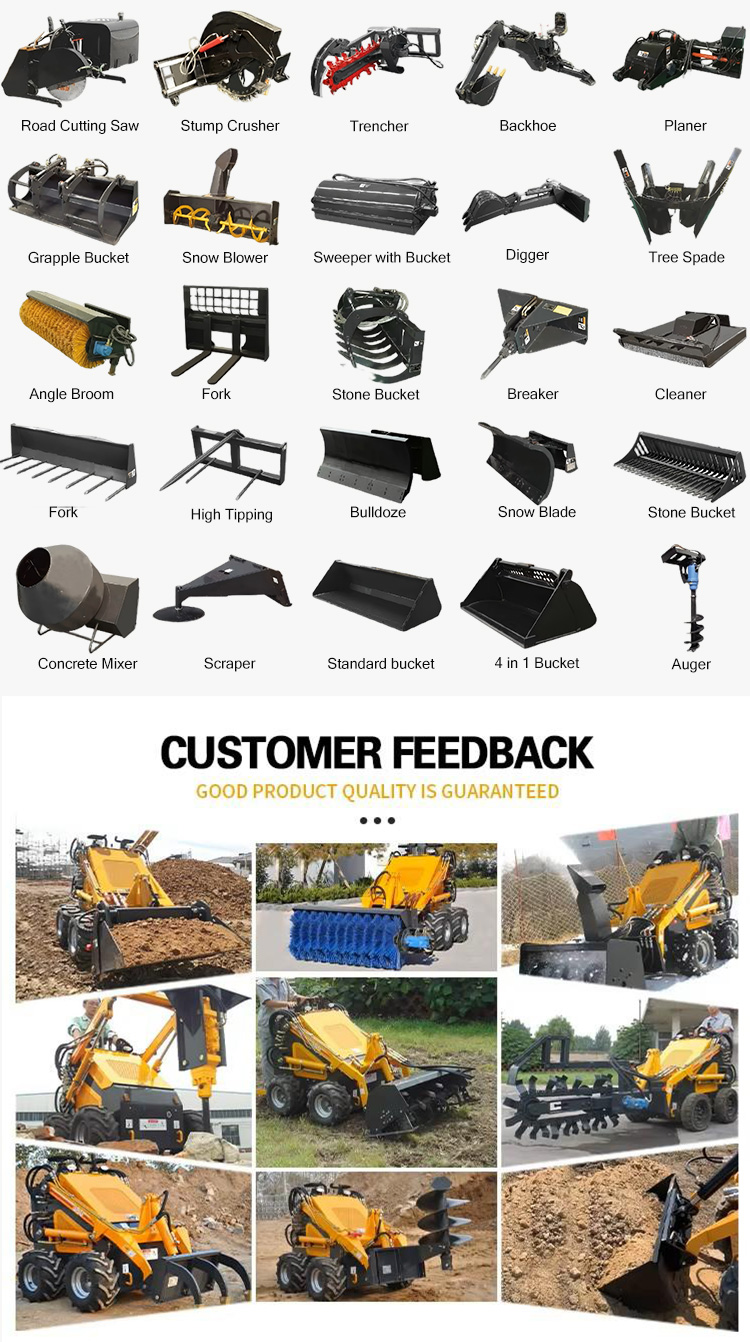
- Rental fleets and attachment ranges: dealers and rental operators add a breaker to a line-up that already includes buckets, planers and sweepers, giving customers a demolition option on the carriers they already hire.
Fit-Up & Supplied Items
| Mounting | Universal quick-attach plate, matching the interface your loader uses for buckets |
| Hydraulic supply | The loader's auxiliary circuit — flow and pressure confirmed against your machine before the order is placed |
| Hose set | Coiled hydraulic hoses with quick-connect couplers |
| Chisels | Chisel bits supplied with the attachment, replaceable when worn |
| Nitrogen cylinder | Cylinder and valve supplied with the unit for service work |
| Tool storage | A case keeps chisels, fittings and the cylinder together between jobs |
| Housing | Reinforced steel body built for repeated impact |
| Sealing | Modular seal groups, so a leak can be serviced in sections |
| Housing finish | Matte black |
Maintenance & Wear Parts
- Check the chisel tip before every shift. A rounded or mushroomed edge spreads the blow and loads the tool harder, so dress it or swap it before it starts costing production.
- Inspect the hoses and couplers at the same time. A nicked seal or a coupler that is not fully seated shows up as a weeping joint, and it is cheaper to fix in the yard than on a carriageway.
- Keep the chisel shank lubricated as part of the daily routine; a dry shank wears the bushings faster and the slack shows up in the quality of the blow.
- Never fire the tool with nothing under the chisel. Blank firing sends the energy back into the breaker's own components and is the quickest way to shorten their service life.
- Do not pry with the chisel. Side loading bends the tool and wears the bushings out of round, which is the most common cause of premature wear on a breaker of this size.
- Set the attachment down on its side rather than resting it on the chisel tip, and cap the couplers during transport so grit stays out of the hydraulic circuit.
- Replace rather than repair. A chisel past dressing or a bushing out of tolerance cannot be brought back — fitting a new part is what restores full impact energy.
Ordering & Delivery
- Send the carrier details first — loader make and model, mounting type, and the auxiliary hydraulic flow and pressure from your machine's specification sheet. As a skid steer hydraulic hammer supplier, we would rather match the configuration to the machine than guess at it.
- Tell us what you are breaking — concrete, rock, asphalt or frozen ground — and the typical thickness involved, so the tool is set up for the work in front of you.
- We confirm availability, the configuration for your carrier, and the terms that apply to your order.
- In-stock units dispatch within 7 days, and overseas consignments are handled under Logistics & Shipping – Global export expertise from booking through delivery.
- Attachments travel in export packing for sea freight, with hydraulic ports capped and loose items secured; tell us if your market expects particular marking, pallet size or crating.
- Ask about adding spare wear parts to the order, so a chisel, bushing or seal is on the shelf before it is needed.
Fleet Sharing & Loader Compatibility
- Fleet-wide deployment: pressure from the loader's auxiliary circuit drives the piston, and the attachment mounts on the same quick-attach plate your buckets use, so a skid steer hydraulic breaker can be released from one machine and picked up by another in the fleet instead of staying tied to a single loader.
- Sharing costs a changeover, not a second purchase: fitting the tool and coupling two hydraulic lines takes minutes, which is what makes one breaker practical across a yard full of carriers.
- Keep a setting sheet per carrier: note the auxiliary flow and pressure you run on each loader and keep those figures with the tool, so moving it onto a different machine is a known setting rather than something worked out on site.
- Match the carrier to the work: put the heavier slab, foundation and rock breaking on the loader with the strongest auxiliary output, and leave the compact machines for kerbs, trenching and interior work where the small frame is the advantage.
- Decide between one unit and several on how hard it works: a tool running a few days a week on one site serves a whole fleet as a single purchase, while two crews breaking daily on separate sites, or double-shift working, usually justify a second unit rather than moving one breaker between jobs.
- Dealer and rental fleets: keeping a breaker in the hire line-up means demolition can be offered on whichever loader the customer has already booked, and the tool comes back for the next hire instead of sitting idle on one machine.
- Travel it as a complete package: standardise couplers across the fleet and send the breaker out with a spare chisel, the nitrogen cylinder and the fittings, so it is ready to work on whichever carrier it reaches.
- Adding loaders later: a new machine joining the fleet needs a standard attachment interface and an auxiliary circuit up to the job — confirm the flow and pressure figures with us and the breaker you already own goes into the rotation with it.
Supply Chain & Delivery Assurance
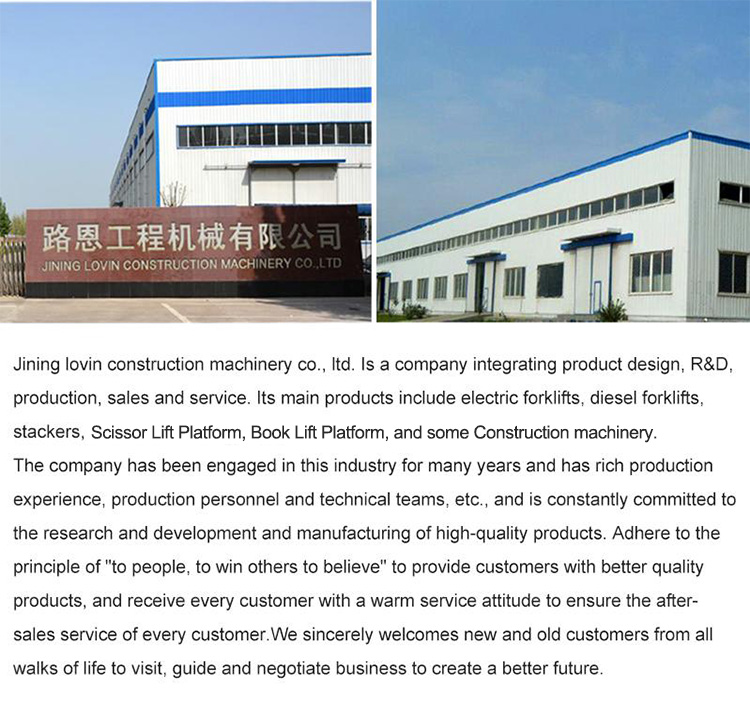
Lovin (Jining Lovin Construction Machinery Co., Ltd.) has supplied machinery buyers since 2017 as a distributor, sourcing through authorised channels and a verified supplier network. One order can cover the machinery mix your customers ask for and leave as a single consolidated shipment. Stocked items dispatch within about 7 days; lead times are confirmed against availability at enquiry, and busy-season schedules are agreed with suppliers in advance. OEM and customised builds follow the same route, and spare and wear parts stay supported after delivery. We export to Europe, South America, the Middle East, Australia, New Zealand and Russia.
FAQ
Q1. What materials can a skid steer hydraulic breaker handle?
Hard, brittle material is what it is built for: concrete, rock, asphalt pavement and frozen soil. If your work is mostly ductile or fibrous — heavy timber, cables, root balls — a different attachment will serve you better.
Q2. Will it fit my skid steer loader?
This hydraulic rock breaker hammer attachment for concrete demolition mounts on a universal quick-attach plate and runs from the loader's auxiliary hydraulic circuit, so it suits most skid steer loaders with a standard attachment interface. What decides the match is your machine's hydraulic system and mounting configuration rather than the brand on the tailgate — send the loader make and model with its flow and pressure figures when you enquire, and we will confirm before the order is placed.
Q3. Can the breaker be customized, and what support is there after purchase?
We work as a skid steer hydraulic hammer supplier to dealers, contractors and rental fleets rather than as a catalogue seller, and customized solutions are part of how this attachment is supplied. Tell us what your market or your fleet needs — a particular chisel setup, a build matched to the carriers you run, marking for your brand — and our technical team confirms what is possible before you commit. After-sales support runs through the same team that configured the tool, so wear-part and technical questions are handled by someone who already knows your order.
Q4. Why is this breaker well suited to urban demolition projects?
Most urban jobs already have a skid steer on site for loading and clean-up, so putting the breaker on that machine means the demolition work is done with equipment that is already there — no second carrier to deliver, park or man, and no separate breaker hire to schedule. It will also reach courtyards and tight service areas that a larger breaker rig has no room to work in.
Q5. How long does it take to change from a bucket to the breaker?
It is a quick-attach change rather than a rebuild. Release the bucket, pick up the breaker on the same mounting plate, couple the two hydraulic lines with the quick-connect fittings, and the tool is ready to break. Most of the time on a changeover goes on role the carrier, not on fitting the attachment.
Q6. Can this breaker run on a compact or mini skid steer?
It can, provided the machine's auxiliary hydraulic circuit is up to the job and the attachment interface matches. Compact loaders vary a good deal in flow and pressure, so the answer depends on the specific model — send the make, model and hydraulic figures with your enquiry and we will confirm whether your loader runs the breaker comfortably or whether a different carrier is the better match.
Q7. Can one breaker be shared between the skid steers in my fleet?
Yes. The standard quick-attach plate and the fact that the breaker runs from the carrier's auxiliary hydraulics mean a single unit can move between loaders instead of being tied to one machine. Different models deliver different hydraulic output, so note the settings that suit each carrier before the tool goes into rotation.
Q8. Which wear parts are worth keeping on the shelf?
The consumables are the chisel, the bushings and the seals. A spare chisel is the one that pays for itself first, because a dressed or fresh tip restores full impact energy; bushings and seals are worth holding if the tool runs most days.